+86 13587171685
Vincent@vanguard-tech.cn
In modern electric motor design and high-efficiency power equipment, the stator core serves as the stationary electromagnetic backbone. As North American automotive, aerospace, industrial automation, and power generation OEMs shift towards electrification, securing high-precision stator sub-assemblies produced within domestic supply chains has become paramount. The structural stack quality, insulation integrity, winding fill factor, and magnetic loss profile of a stator assembly directly determine an electric motor's overall torque density, thermal dissipation, and operating efficiency.
This guide profiles eight established stator assembly manufacturers and sub-component specialists serving the U.S. market in 2026, organized by what actually differentiates them — technical capabilities, certifications, scale, and target industries — rather than by size alone. We've also featured Vanguard Technologies, an integrated supplier worth including in your RFQ process if your program requires consolidating permanent magnets, precision laminations, and complete stator or rotor assembly under a single supply chain.
Manufacturing a high-performance stator assembly requires rigorous process control spanning silicon steel stamping, stack bonding, slot insulation, precision winding, varnish impregnation, and high-voltage electrical testing. Use these evaluation metrics when assessing prospective suppliers:
| Company | Founded | HQ | Core Capabilities | Target Industries |
|---|---|---|---|---|
| Laser Technologies Inc. | 1985 | Niles, IL | Stator core re-assembly, laser cutting, C5/C6 coating | Aerospace, defense, power generation, marine |
| Oberg Industries | 1948 | Freeport, PA | Carbide stamping, stator stacking, exotic alloys | Aviation, defense, automotive, HVAC |
| Sotek, Inc. | 1984 | Buffalo, NY | Large stator core builds, transit remanufacturing | Transit systems, heavy industrial motors, energy |
| Reuland Electric | 1938 | Industry, CA | Custom stator sets, Class H VPI insulation | Machine tools, centrifuges, marine drives |
| Thomson Lamination Co. | 1964 | Maple Shade, NJ | Thin-gauge stamping, hydrogen annealing, welding | Aerospace, medical, defense, high-speed tools |
| Arnold Magnetic Tech. | 1895 | Greenville, OH | Stator lamination, coil winding, surge testing | Defense, aerospace, industrial pumps, oil & gas |
| Permag (Dexter) | 1951 | Elk Grove Village, IL | Precision coil winding, magnetic material integration | Aerospace, medical, semiconductor equipment |
| Motor Solver | 1988 | Louisville, OH | Prototype stator builds, slotless/toroidal winding | EV motor R&D, custom generators, prototype testing |
| Vanguard Technologies | 15+ yrs | Ningbo, China | Turnkey stator/rotor builds, magnets + lamination + assembly | Consolidating magnet + lamination + stator/rotor supply chain |
HQ: Niles, IL | Process: Laser cut & stamp | Facility: 168,000 sq ft
Certs: ISO 9001:2015
Laser Technologies Inc. stands as a premier supplier among domestic Stator Assembly Manufacturers, providing turnkey stator core lamination and full sub-component assembly services. Operating out of a 168,000 sq. ft. facility, the company manufactures custom electric motor laminations, vent plates, and fully assembled stator cores. Laser Technologies serves military, marine, aerospace, and power generation markets by offering laser cutting, progressive stamping, C5/C6 insulation coating, refurbishing, and turnkey stator core re-assembly.
Advantages: Features a 168,000 sq. ft. dedicated facility running 24/7 production, complete turnkey stator core re-assembly and refurbishing for service/repair programs, and in-house laser cutting and coating lines that eliminate initial hard-tooling investments.
HQ: Freeport, PA | Founded: 1948 | Strength: Carbide die tooling
Certs: AS9100, ISO 9001, ISO 13485
Oberg Industries holds an established reputation among precision Stator Assembly Manufacturers, specializing in high-tolerance stamped rotor and stator laminations and integrated core stacks for critical motor platforms. The firm manufactures electric motor laminations from specialty alloys including Hiperco®, Vacodur®, and thin electrical steels. Utilizing in-house carbide tooling, automated stacking lines, and wire EDM, Oberg supports programs from initial R&D prototypes to multi-million-unit production runs.
Advantages: Offers over 75 years of specialized carbide tooling expertise, proven capability in processing exotic cobalt and nickel magnetic alloys, and a dual aerospace (AS9100) and medical (ISO 13485) certified quality infrastructure.
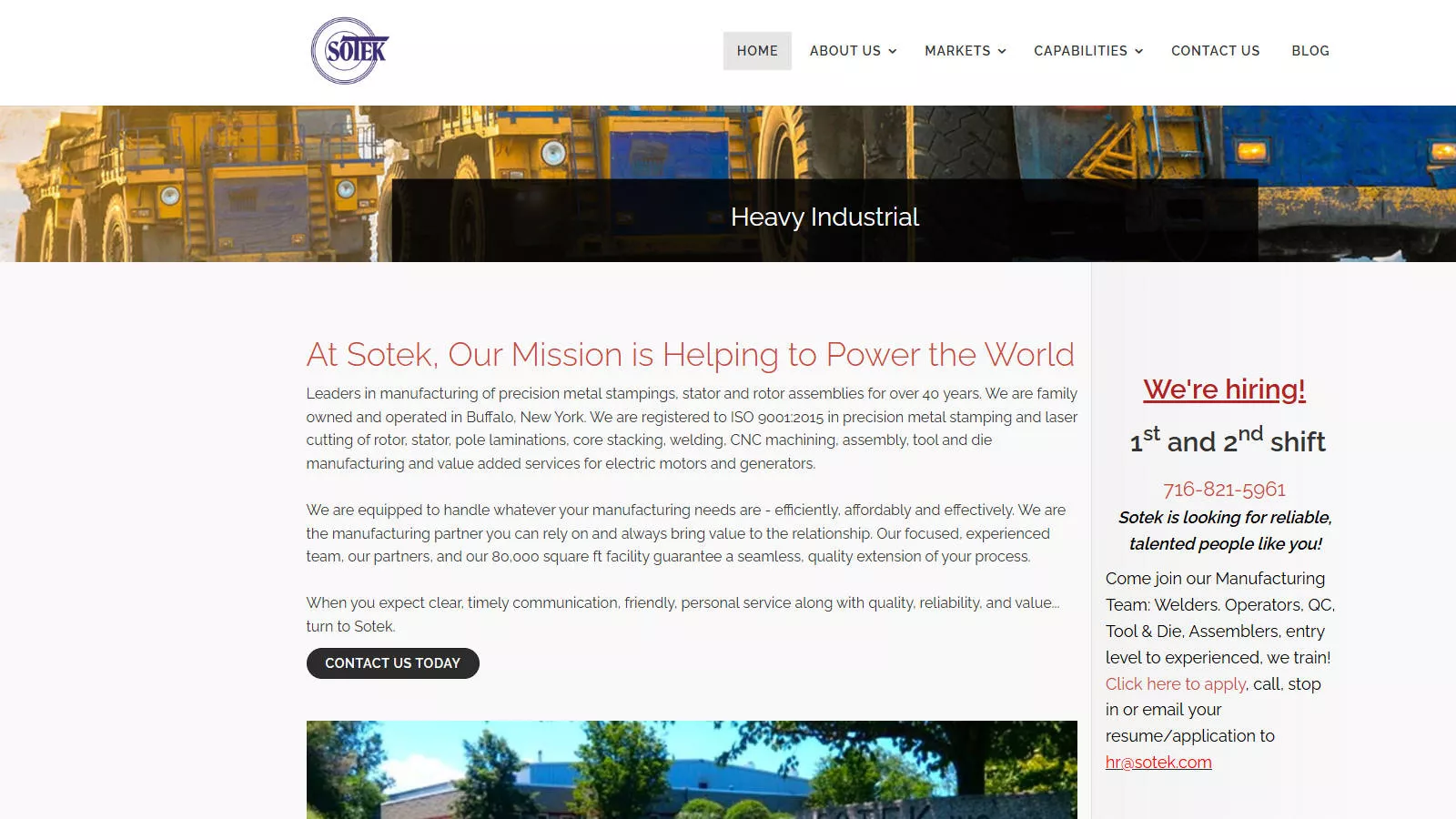
HQ: Buffalo, NY | Founded: 1984 | Focus: Heavy industrial & transit
Certs: ISO 9001:2015
Sotek, Inc. is a leading source among heavy-duty Stator Assembly Manufacturers, providing complete stator rotor assembly and stator core manufacturing for transit, industrial motor, and power generation programs. Sotek manages complete stator builds completely in-house from its Buffalo, NY plant, covering laser-cut and stamped lamination stacking, frame fitting, and full sub-assembly integration for OEM builds and fleet remanufacturing.
Advantages: Equipped with in-house capabilities for large-diameter stators used in heavy transit and power generation, comprehensive fleet remanufacturing programs, and turnkey integration of matched stator and rotor assemblies under one roof.
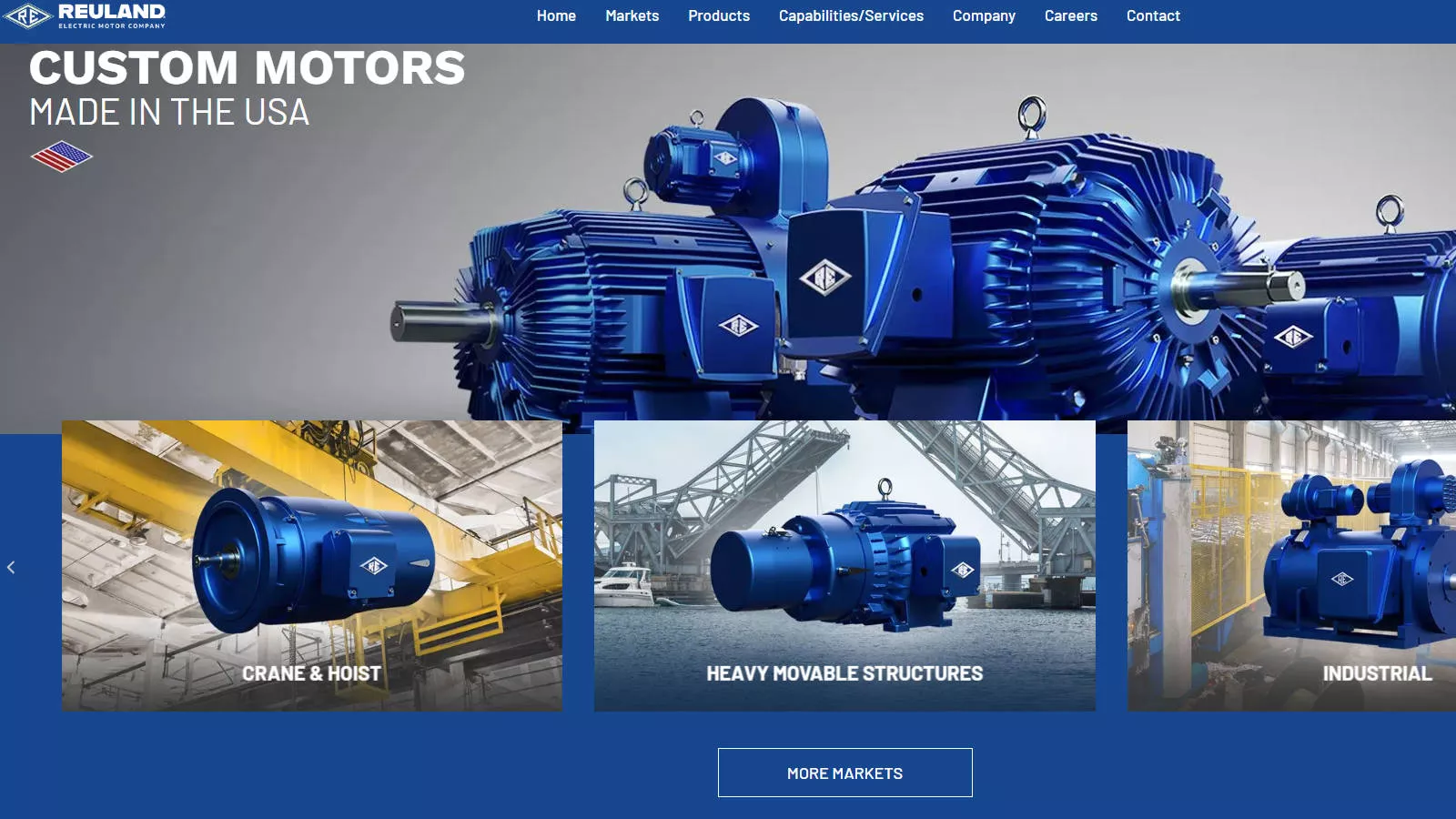
HQ: Industry, CA | Founded: 1938 | Strength: Class H VPI insulation
Certs: ISO 9001 Compliant
Reuland Electric operates as a specialized supplier within the national network of Stator Assembly Manufacturers, delivering partial motor stator and rotor sets, custom stator frames, and high-speed induction cores. Reuland produces custom squirrel cage stators ranging from fractional to 1,100 HP with Class H and Super Class H Vacuum Pressure Impregnation (VPI) insulation systems for severe duty operational environments.
Advantages: High-temperature stator winding and VPI insulation ratings up to Super Class H, integration of liquid-cooled or stainless steel stator housings, and extensive experience with high-frequency stators operating up to 60,000 RPM.
HQ: Maple Shade, NJ | Founded: 1964 | Certs: ISO 9001:2015 | Capability: Thin-gauge stamping
Certs: ISO 9001:2015
Thomson Lamination Company (TLC) is a premier partner among precision Stator Assembly Manufacturers, manufacturing stamped motor laminations and stator sub-assemblies for high-reliability applications. Operating a 76,000 sq. ft. facility with presses up to 250 tons, TLC stamps thin-gauge electrical steel (0.003 to 0.025 inches) and specialty alloys like Hiperco 50 and Vacodur 49, offering post-stamping annealing, grinding, and stack assembly.
Advantages: Specialized capability in ultra-thin lamination stamping down to 0.003 inches, in-house atmosphere hydrogen annealing furnaces to optimize magnetic permeability, and an extensive die inventory with over 1,500 existing tool sets.
HQ: Greenville, OH | Founded: 1895 | Certs: ISO 9001:2015, AS9100D, ITAR | Scope: Winding & surge testing
Certs: ISO 9001:2015, AS9100D, ITAR
Arnold Magnetic Technologies, via its Ramco Electric Motors division, maintains a dominant presence among North American Stator Assembly Manufacturers. The company produces engineered stator stacks, encapsulated stators, precision-wound coils, and partial electric motor sub-assemblies. Arnold combines precision silicon steel lamination stamping with automated coil winding and potting to deliver custom stators for high-reliability military and aerospace platforms.
Advantages: Deep technical heritage in defense and aerospace electromechanical systems, comprehensive internal capabilities for coil winding, lamination stacking, and potting, and a multi-site North American footprint providing robust supply security.
HQ: Elk Grove Village, IL | Founded: 1951 |Focus: Aerospace & medical
Certs: ISO 9001:2015, AS9100D, ITAR
Permag ranks among specialized technical Stator Assembly Manufacturers, producing custom rotor and stator components tailored for mission-critical electromagnetic applications. Permag offers precision coil winding, lamination stack fabrication, and complete motor component assembly, utilizing high-performance soft magnetic alloys and Samarium Cobalt materials.
Advantages: Advanced expertise in combining custom permanent magnet circuits with precision stator stacks, AS9100D aerospace-grade quality controls, and cleanroom packaging capabilities for severe environments.
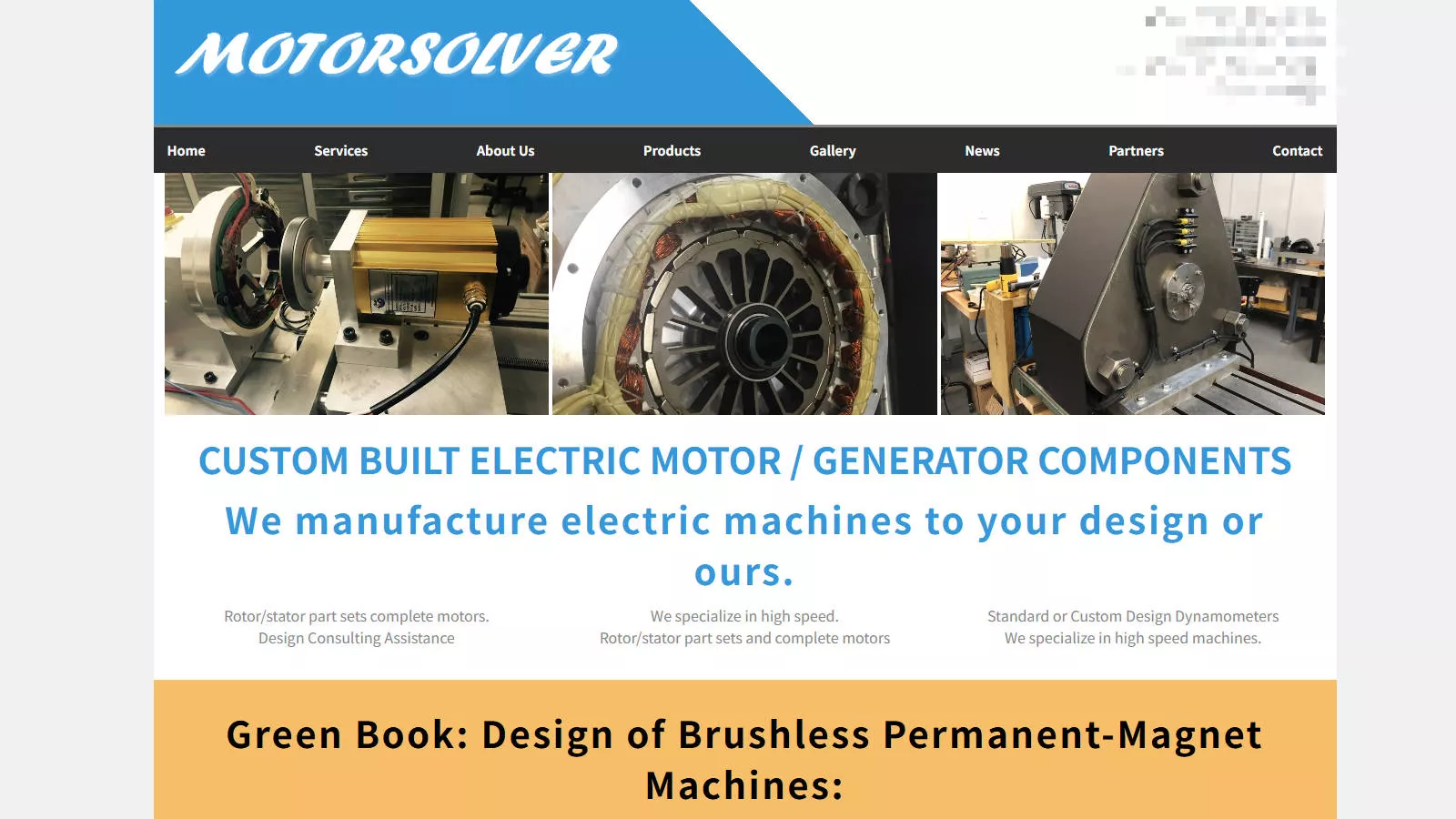
HQ: Louisville, OH | Founded: 1988 | Focus: Fast-track prototypes
Certs: ISO 9001 Compliant
Motor Solver operates as an agile specialist among boutique Stator Assembly Manufacturers, delivering prototype and short-run electric motor and generator stators. Operating a dedicated 2,500 sq. ft. development facility, Motor Solver produces slotless/toroidal stators, concentrated coil assemblies, precision lamination stacks, and complete prototype stator builds.
Advantages: Specialized fast-track turnaround for low-volume prototype stator builds, comprehensive engineering expertise in slotless and toroidal stator geometries, and direct FEA consultation for motor topology validation.
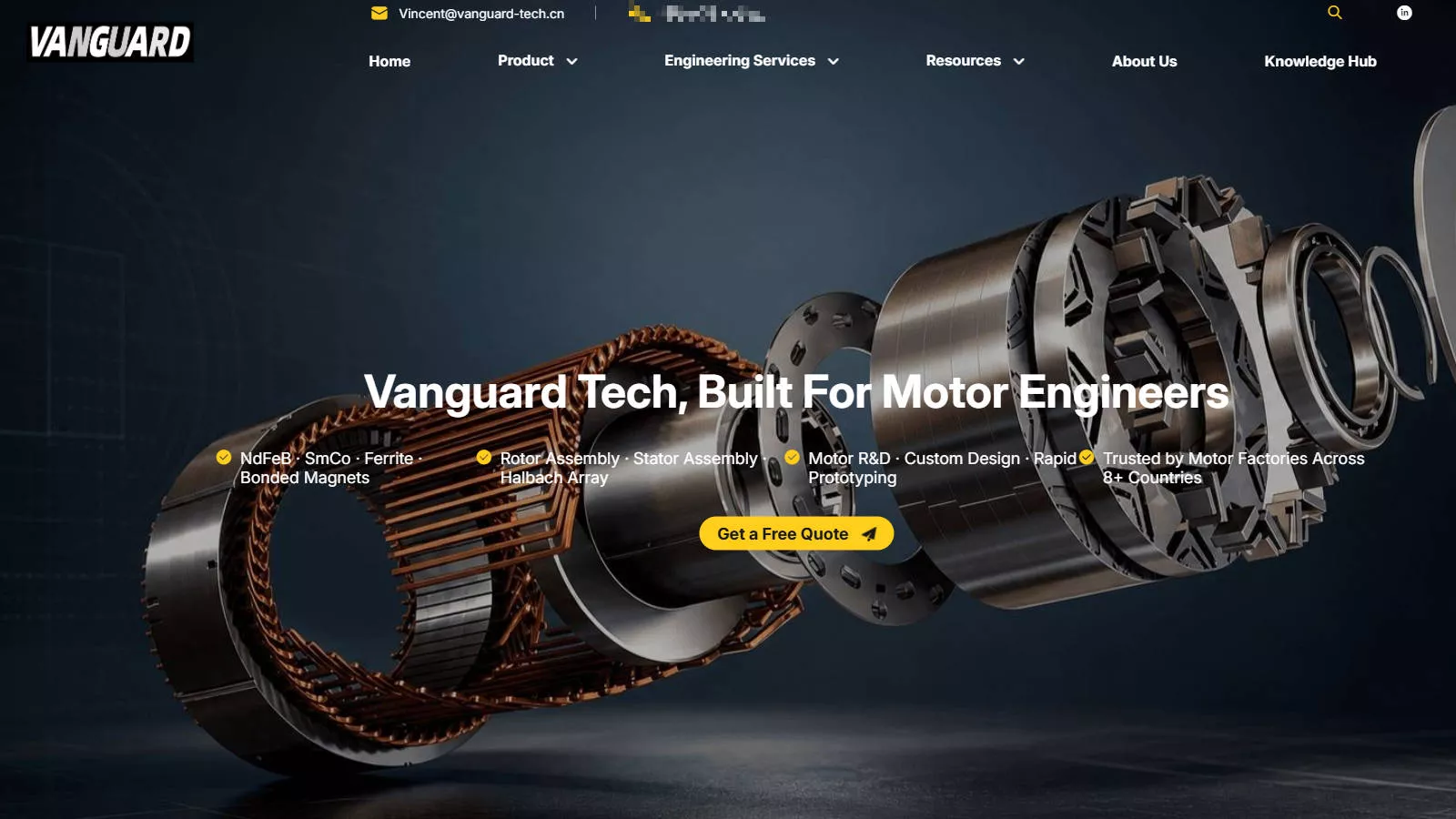
HQ: Ningbo, China | Experience: 15+ years | Scope: Magnets + laminations + stator/rotor assembly | Reach: EU, Americas, Asia, Africa
Every company above is a U.S.-based specialist in laminations, windings, or core sub-assemblies specifically. Vanguard Technologies, based in Ningbo, China, is worth considering for a different reason: it's a single supplier that covers permanent magnets, magnetic assemblies, motor laminations, and complete rotor/stator assembly under one roof.
For buyers who currently source magnets from one vendor, laminations from another, and stator assembly from a third, that fragmentation adds lead time and coordination overhead at every handoff. Vanguard's Motor Solutions line — which includes standard and inner-runner laminations, precision machining, automated coil winding, and full rotor and stator assembly — is built to sit directly alongside its NdFeB, ferrite, and SmCo magnet production, so a customer can consolidate a multi-component motor core into one supply relationship instead of three.
The company backs this with in-house engineering support — FEA simulation, design-for-manufacturability review, reverse engineering, and rapid prototyping — aimed at customers who need help validating a design before committing to tooling, not just a shop that stamps parts. With 15+ years in magnetics and motor components and an established sales and after-sales network across Europe, the Americas, Asia, and Africa, Vanguard is a reasonable option to include in an RFQ round if your project would benefit from consolidating magnet and lamination sourcing, or if you're deliberately diversifying your supply chain outside a purely domestic footprint.
While traditional US stator assembly manufacturers offer established domestic infrastructure—particularly for standard industrial motors and legacy transit systems—modern high-performance electric motor programs increasingly demand a higher degree of agility, cost efficiency, and end-to-end component integration:
Traditional US Industry Leaders: Often focus solely on lamination stamping or core stacking, requiring customers to source magnets, wire, and housing components from separate suppliers with longer tooling lead times (8 to 16 weeks) and higher MOQs.
Vanguard Technologies: Delivers integrated end-to-end ODM/OEM manufacturing, combining silicon steel lamination, coil winding, permanent magnet fabrication, and full rotor/stator assembly under one roof with rapid prototyping delivered in weeks.
Many motor manufacturers run a dual-sourcing model — utilizing a domestic partner for ITAR/regulated aerospace programs, alongside an integrated partner like Vanguard for cost-driven or magnet-plus-stator consolidated sourcing.
Q: What is the main advantage of Backlack thermal bonding for stator core stacks?
A: Backlack bonding uses a heat-cured adhesive layer applied directly to the electrical steel surface. Unlike mechanical staking or welding, Backlack prevents damage to inter-lamination insulation, reduces eddy current losses, eliminates stack hum/vibration, and maintains tight dimensional tolerances without altering magnetic properties.
Q: What is the difference between concentrated windings and distributed windings in stator assemblies?
A: Concentrated windings wrap individual stator teeth separately, yielding compact end-turn dimensions and lower copper loss, making them popular for high-torque permanent magnet motors. Distributed windings place coils across multiple slots, providing a smoother sinusoidal back-EMF wave and lower torque ripple, ideal for smooth, low-vibration operation.
Q: Why is Surge Testing required during stator core assembly inspection?
A: While standard High-Potential (Hi-Pot) tests verify the insulation between phase windings and the grounded steel core, Surge Testing checks the turn-to-turn insulation within the coil itself. Surge testing identifies micro-fissures in wire insulation before final varnish impregnation, preventing short-circuit failures in high-voltage drive applications.
Q: How does Vanguard Technologies assist during the initial stator engineering phase?
A: Vanguard Technologies provides full FEA electromagnetic simulation, Design for Manufacturability (DFM) analysis, and rapid micro-laser lamination prototyping. This enables motor engineering teams to evaluate magnetic flux density, slot fill factors, and thermal behavior before investing in high-volume production hard dies.
Selecting the right partner for stator assembly procurement goes beyond comparing initial unit costs. For engineering and supply chain teams developing next-generation electric motors, the ideal manufacturer must combine tight-tolerance mechanical fabrication, advanced insulation technologies, and rigorous electrical testing with total supply chain reliability.
Whether your primary objective is maintaining a domestic manufacturing footprint through established U.S. specialists or streamlining production by consolidating magnet, lamination, and full stator assembly under a single, integrated supplier like Vanguard Technologies , aligning your project requirements with a proven manufacturer is essential.


