Ningbo Vanguard Technologies Co., Ltd
Material Selection Support for Motors and Magnetic Assemblies
Engineering material selection support for teams choosing magnet materials, laminations, alloys, coatings, adhesives, plastics, insulation systems and manufacturing routes before prototype build or production release.
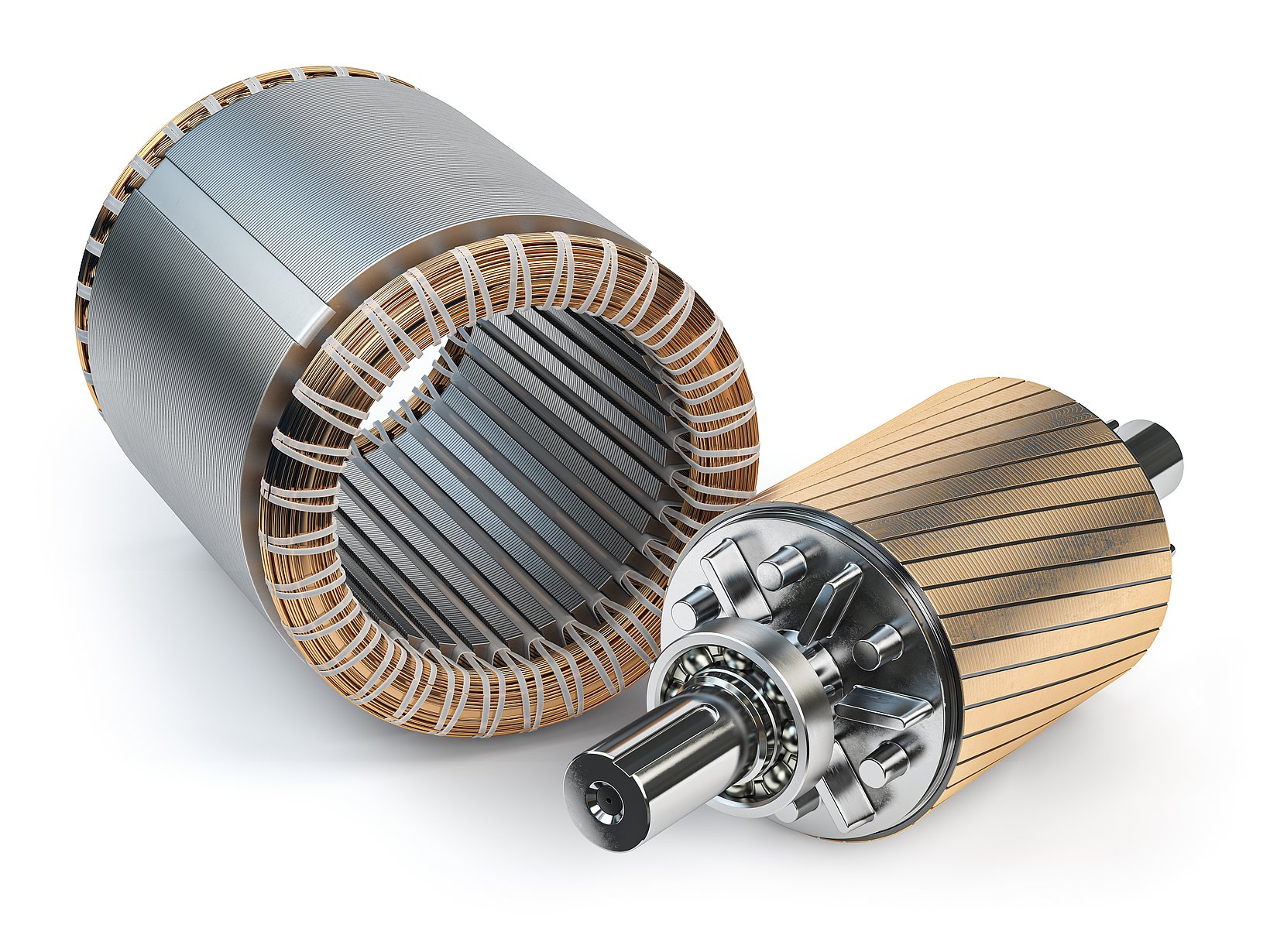
Engineering Positioning
Material Choice Should Be an Engineering Decision
Many failures come from choosing materials by a single number: maximum energy product, tensile strength, price, heat rating or supplier availability. Vanguard reviews materials together with geometry, process route, assembly method, environment and inspection plan.
The correct material is not always the strongest or most expensive option. It is the option that meets the magnetic, mechanical, thermal, chemical, manufacturing and supply requirements of the real application.
For motor and magnetic assembly projects, material selection should connect design intent with production reality: temperature, corrosion, bonding, magnetization, machining, dimensional stability, cost and supplier maturity all matter.
Service Snapshot
What We Help Engineering Teams Decide
01 Application-Driven Selection Review temperature, speed, load, humidity, salt spray, oil exposure, vibration, duty cycle and service life before choosing a material family.
02 Performance vs. Risk Identify demagnetization, brittleness, coating, bonding, machining, molding, supply and cost risks before prototype spending.
03 Process Compatibility Check whether the selected material fits grinding, machining, stamping, winding, molding, coating, adhesive bonding and magnetization.
04 Production Awareness Consider cost stability, batch consistency, lead time, supplier maturity, incoming inspection and acceptable substitution rules.
Image Gallery
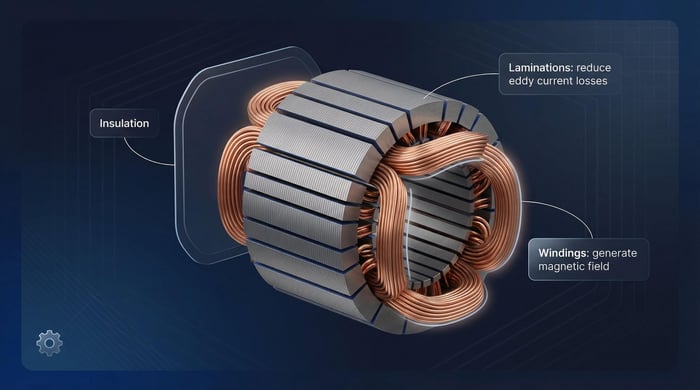
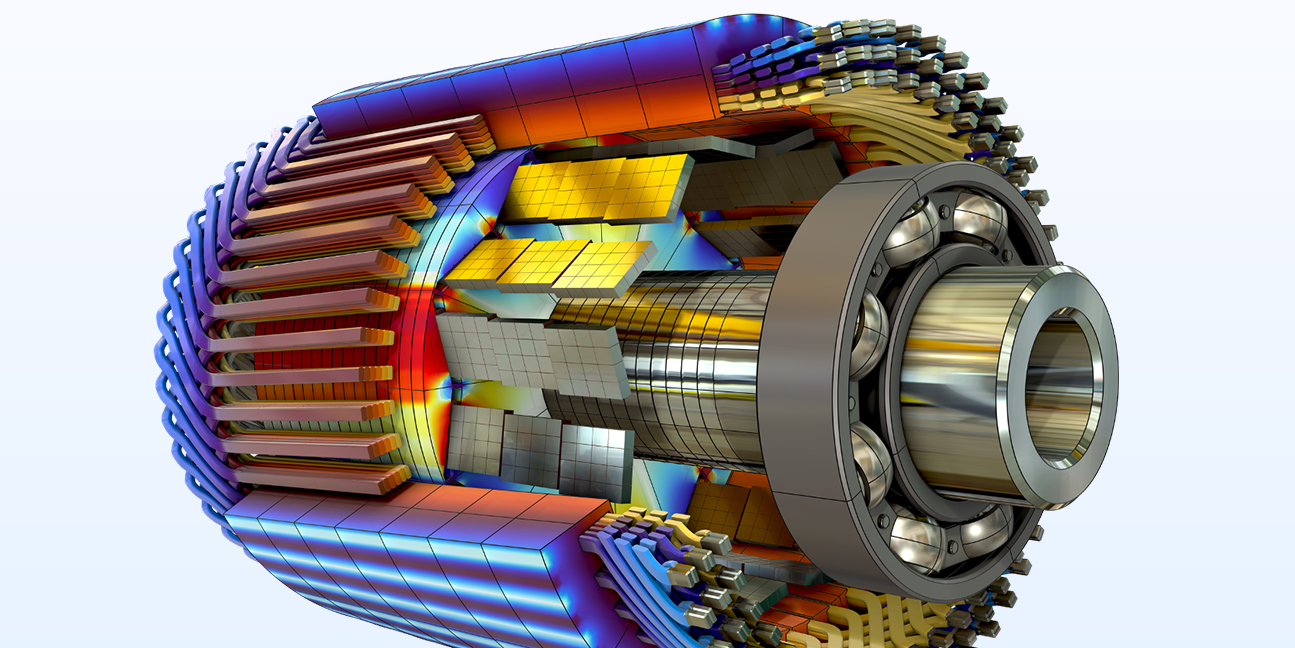
Material Areas Commonly Reviewed in Motor Projects


Engineering Intake
Information Needed for a Serious Material Review
Material recommendations become more reliable when the working condition and failure risk are clear. Missing values can be estimated during early feasibility review, but production release needs confirmed limits.
| Input Area | Recommended Data | Why Engineers Need It | Typical Output |
|---|---|---|---|
| Application Function | Magnetic output, torque, holding force, shielding, load, thermal path or insulation role | Defines which material properties actually matter | Material family shortlist |
| Working Environment | Temperature, humidity, salt spray, oil, chemical exposure, dust, vibration and duty cycle | Determines grade, coating, adhesive, insulation and corrosion protection | Environment-based risk review |
| Geometry & Assembly | Size, tolerance, wall thickness, air gap, bonding area, retention and contact surfaces | Some materials fail because the geometry or assembly route is unsuitable | Process-compatible recommendation |
| Performance Target | Flux, pull force, torque, temperature rise, strength, hardness, electrical loss or insulation level | Connects material selection with measurable acceptance criteria | Performance and test checklist |
| Production Target | Prototype quantity, annual volume, cost target, approved vendors and origin limits | Changes the choice between high-performance, economical and supply-stable routes | Prototype and mass-production route |
| Current Problem | Demagnetization, cracking, corrosion, delamination, noise, heat or supply instability | Failure mode determines which property or process must change | Root-cause-oriented alternatives |
Workflow
How Material Selection Support Usually Moves Forward
1 Requirement Review Clarify application function, working environment, geometry, production target and the reason for material selection.
2 Material Shortlist Compare feasible material families, grades, coatings, adhesives or process routes against real constraints.
3 Risk Review Identify demagnetization, corrosion, brittleness, thermal aging, machining, bonding or supply risks.
4 Prototype Route Recommend sample material, process method, test items, inspection level and comparison criteria.
5 Production Decision Support final grade, supplier route, substitution rule, incoming inspection and production control plan.
Selection Scope
Material Families We Commonly Review
Magnets Permanent Magnets NdFeB, SmCo, ferrite, AlNiCo, bonded NdFeB, injection molded magnets, coatings, segmentation and magnetization direction.
Core Soft Magnetic Materials Silicon steel, amorphous material, SMC, electrical steel thickness, loss level, lamination method and stack process.
Structure Metals & Alloys Stainless steel, carbon steel, aluminum alloy, copper alloy, shaft materials, sleeves, housings and heat-treatment options.
Assembly Coatings, Plastics & Adhesives Nickel, epoxy, zinc, passivation, PA, PPS, PBT, potting, retaining compound and thermal interface material.
Design Choices
Typical Material Selection Trade-Offs
Good material selection balances performance, cost, process risk and reliability. These trade-offs should be visible before drawings and samples are frozen.
When the target is motor or magnetic assembly production, a material that looks strong in a datasheet may still be unsuitable if it cannot be machined, coated, bonded, magnetized or inspected consistently.
Comparison Table
Common Trade-Offs in Motor Material Selection
| Decision | Higher Performance Direction | Lower Risk / Cost Direction | Review Point |
|---|---|---|---|
| Magnet Grade | Higher Br or higher temperature grade | Balanced grade with larger safety margin and stable supply | Check demagnetization, cost and availability |
| Magnet Material | NdFeB or SmCo for high magnetic output | Ferrite, AlNiCo or bonded magnet where cost, stability or shape matters | Review temperature, corrosion and magnetic circuit |
| Lamination Material | Lower-loss steel, thinner gauge or amorphous material | Standard silicon steel with mature tooling and stable sourcing | Compare efficiency gain with process cost |
| Coating | Multi-layer or high-corrosion coating system | Standard coating if environment and handling are controlled | Validate salt spray, bonding and dimensional impact |
| Adhesive | High-temperature or high-strength bonding system | Production-friendly adhesive with stable cure and inspection method | Check gap, surface preparation, aging and process control |
| Plastic / Insulation | Higher temperature or higher strength polymer | Material with proven molding window and supply stability | Review thermal aging, creep and dimensional repeatability |
Deliverables
What We Can Provide
Comparison Material Comparison Table Candidate grades, benefits, risks, cost direction, availability and application notes.
Route Recommended Material Plan Preferred material, backup option, process notes and supplier feasibility comments.
Risk Test and Risk Checklist Demagnetization, corrosion, thermal aging, mechanical strength, bonding and inspection items.
Prototype Sample Material Route Prototype process, test items, acceptance criteria and expected production transition.
Production Incoming Inspection Notes Material certificate, dimension, coating, magnetic property, hardness or loss verification points.
Substitution Backup Material Options Controlled alternatives for cost pressure, lead time issues, supplier changes or localization needs.
Risk Control
Common Material Selection Mistakes We Help Avoid
Datasheet Choosing by One Value Datasheet properties do not automatically survive geometry, assembly stress, temperature and production variation.
Process Ignoring Manufacturing Fit A strong material can still fail if it is difficult to grind, coat, bond, mold, magnetize or inspect consistently.
Supply No Backup Route Single-source materials create production risk when lead time, cost or grade availability changes.
Environment Underestimating Exposure Humidity, salt spray, oil, thermal cycling and vibration often decide coating, adhesive and grade selection.
Cost Over-Specifying Early Overly expensive materials can hide design problems and make production cost unrealistic.
Validation No Test Link Material selection should connect to measurable tests, not only discussion and supplier claims.
FAQ
Material Selection Support FAQ
Can you help choose between NdFeB, SmCo, ferrite and AlNiCo?
Yes. We can compare magnetic output, temperature capability, corrosion risk, cost direction, machining or forming constraints and supply stability for the actual application.
Can material selection include coatings and adhesives?
Yes. For magnetic assemblies and motor rotors, coating and adhesive selection is often as important as the magnet grade itself because bonding, corrosion and thermal aging affect reliability.
Can you support both prototype and production decisions?
Yes. Early prototypes may use fast sample routes, while production release should include supplier feasibility, batch consistency, incoming inspection and approved backup materials.
What should we send first?
Useful files include drawings, 3D models, samples, current material grade, supplier datasheet, working temperature, environment description, performance target, failure photos, test data and annual volume.
Start With the Application, Not Only the Material Name
Send the application, working condition, drawing or sample, current material problem and what the material needs to achieve. We can help build a practical material route for prototype and production.
Image sources: Hero image from Kandelium motor material application page; rotor component image from Ruixin Mould motor component guide; stator and winding image from Woodrow Scientific blog CDN; ferrite ring magnet image from Wikimedia Commons; motor simulation image from COMSOL motor modeling resources. Images were selected from visible no-watermark web results. For formal commercial publishing, please confirm usage rights with the source owners or replace them with company-owned material, magnet and motor component photos.
Engineering Services
Set A Consultation Today
Name can't be empty
Email error!
Send Your Message
*We respect your confidentiality and all
information are protected.