Top 8 Motor Laminate Manufacturers in the USA 2026
Every electric motor starts with a stack of thin metal sheets. Get that stack wrong — the wrong steel grade, an inconsistent tolerance, a supplier that can't scale from prototype to production — and the motor built on top of it underperforms no matter how good the rest of the design is. That makes choosing a motor lamination manufacturer one of the highest-leverage sourcing decisions in an electric motor program.
This guide profiles eight established motor lamination manufacturers and equipment suppliers serving the U.S. market, organized by what actually differentiates them — process, certification, scale, and the industries they serve best — rather than by size alone. We've also included one global supplier, Vanguard Technologies, that's worth adding to your RFQ list if you're building out a broader magnet-and-motor-component supply chain rather than sourcing laminations in isolation.
None of the companies below paid for inclusion or placement. Information is drawn from each company's own published materials as of mid-2026 — verify current certifications, capacity, and lead times directly with each supplier before making a sourcing decision.
What to Look for in a Motor Lamination Manufacturer
Before comparing individual suppliers, it helps to know which variables actually predict a good working relationship. Use these as your evaluation checklist:
- Manufacturing process. Progressive-die stamping is the standard for volume production; laser cutting and chemical (photochemical) etching are typically faster and cheaper for prototypes or low-volume runs because they avoid hard tooling costs, but are usually not the most cost-effective choice once volumes climb.
- Material range. Confirm the supplier actually works with the grade you need — non-oriented silicon steel (M15–M45) for most motors, grain-oriented steel for transformers, or cobalt-iron and nickel alloys for high-flux-density aerospace and defense applications.
- In-house annealing. Stamping and cutting introduce mechanical stress that degrades magnetic performance. Suppliers with their own annealing furnaces can restore magnetic properties in-house instead of shipping parts out, which shortens lead time and reduces handling risk.
- Certifications. ISO 9001 is the baseline. AS9100D and ITAR registration matter for aerospace/defense programs; IATF 16949 matters for automotive; NADCAP applies to specialized processes like heat treating.
- Tooling and prototyping capability. Ask whether the supplier designs and builds its own dies in-house — outsourced tooling adds weeks to every design change.
- Volume flexibility. Some manufacturers are optimized for low-volume, high-mix aerospace work; others are built for millions of units a year in automotive and appliance motors. Match the supplier's sweet spot to your program size.
Quick Comparison
| Company | Headquarters | Founded | Core Process | Best Fit For |
|---|---|---|---|---|
| Laser Technologies Inc. | Naperville, IL | 1975 | Laser cutting & stamping | Aerospace, military, medical — fast turnaround |
| Thomson Lamination Co. | Maple Shade, NJ | 1964 | Progressive-die stamping, in-house annealing | Aerospace, defense, medical, semiconductor |
| LCS Company | St. Paul, MN | 1960s | Precision stamping (3–330 ton presses) | Aerospace, medical imaging, small–large diameters |
| Precision Micro | Birmingham, UK | 1962 | Photochemical (chemical) etching | Prototyping, ultra-thin/burr-free laminations |
| UPG Electrical | Monroe, WI | 1966 | High-speed stamping, die casting | EV traction motors, large-volume production |
| Oberg Industries | Freeport, PA | 1948 | Progressive-die stamping & tooling | EV/HEV automotive, high-speed volume programs |
| Tempel Steel Company | Chicago, IL | 1945 | Stamping, global multi-plant network | Large-scale automotive, HVAC, appliance, energy |
| ANDRITZ (Kaiser) | Graz, Austria | — | Press-line equipment, not a contract manufacturer | Manufacturers building in-house lamination lines |
| Vanguard Technologies | Ningbo, China | 15+ yrs | Stamping, precision machining, rotor/stator assembly | Consolidating magnets + laminations + assembly in one supply chain |
MFG · 01
Laser Technologies Inc.
HQNaperville, IL
ProcessLaser cut & stamp
CertsISO 9001, ITAR, NADCAP
Facility168,000 sq ft
Laser Technologies operates a 168,000-square-foot facility in Naperville, Illinois, running production around the clock. What sets the company apart is process flexibility: it offers both laser cutting and traditional stamping under one roof, along with lamination bonding, core-plate coating, welding, and CNC machining as in-house secondary services. That combination makes it a practical option when a program needs to move from prototype to production without switching suppliers.
The company is ISO 9001:2015 certified, ITAR-registered, and NADCAP certified, and it serves the electric motor, aerospace, military, marine, medical, and nuclear industries — sectors where documentation and traceability matter as much as the parts themselves.
MFG · 02
Thomson Lamination Co., Inc.
HQMaple Shade, NJ
Founded1964
CertsAS9100D, ITAR, NADCAP
StrengthIn-house annealing
Founded in 1964 and based in Maple Shade, New Jersey, Thomson Lamination (TLC) built its reputation on tight-tolerance laminations for mission-critical rotating components — originally guidance and control systems, later expanding into medical, semiconductor, and telecommunications applications. The company runs its own tool room and an in-house annealing department with atmospheric furnaces, which lets it control magnetic performance from raw coil to finished lamination without outsourcing any step.
TLC holds AS9100D, ITAR, NADCAP, and ISO 9001:2015 certifications and is DFARS, RoHS, and REACH compliant — a certification stack aimed squarely at aerospace and defense buyers who need full supply-chain documentation.
MFG · 03
LCS Company
HQSt. Paul, MN
Press range3–330 ton
Diameters0.5″–24″
StrengthAerospace / medical
Based in St. Paul, Minnesota, LCS Company has been stamping electrical laminations for more than six decades, ranging from half-inch instrument components up to 24-inch-diameter generator cores. Its press capacity spans 3 to 330 tons, giving it room to handle both delicate prototype runs and large production volumes on the same floor.
LCS works with cobalt and nickel alloys, silicon steels (M15–M45), and insulator materials like Nomex and Delrin, and it serves aerospace, medical imaging (MRI and X-ray equipment), and missile-guidance applications alongside standard industrial motors. Beyond laminations, LCS also produces related precision-stamped hardware — shims, washers, brackets — which can simplify sourcing for programs that need more than just the core stack.
MFG · 04
Precision Micro
HQBirmingham, UK
Founded1962
ProcessChemical etching
CertsIATF 16949
Precision Micro takes a different approach than the other companies on this list. Headquartered in Birmingham, UK, and serving customers in more than 30 countries, it specializes in photochemical (chemical) etching rather than mechanical stamping or laser cutting. Because etching is a non-contact, non-thermal process, it avoids the cutting-edge stress and heat that can degrade a lamination's magnetic properties — and because it uses digital tooling instead of hard dies, design changes can go into production in days rather than weeks.
That makes Precision Micro a strong fit for prototyping, design iteration, and low-to-mid-volume runs of thin or intricate laminations, though mechanical stamping generally remains more cost-effective at high volumes. The company is IATF 16949 certified for automotive work and has over 60 years of experience in precision etching.
MFG · 05
UPG Electrical
HQMonroe, WI
Since1966
StrengthDie-cast rotors
Track record100M+ rotors cast
UPG Electrical, based in Monroe, Wisconsin, has been producing electrical steel laminations since 1966. The company (formerly Orchid Monroe, acquired by UPG Enterprises in 2022) runs high-speed lamination stamping alongside precision steel slitting, aluminum rotor die casting, robotic welding, and annealing — a vertically integrated setup that has produced more than 100 million die-cast rotors to date.
UPG's part range runs from tiny laminations for medical devices up to large cores for locomotives and wind turbines, and it has built specific expertise in EV traction-drive rotors, including X-ray inspection of die-cast cores for porosity — a detail that matters for high-reliability EV programs.
MFG · 06
Oberg Industries
HQFreeport, PA
Founded1948
Press speedUp to 1,200 spm
FocusEV / HEV programs
Oberg Industries, headquartered in Freeport, Pennsylvania with five U.S. facilities, has one of the longest track records in this space: it introduced tungsten carbide stamping dies in 1948 and produced its first rotor-stator lamination dies in 1950. That tooling heritage still defines the company today — Oberg designs and builds its own progressive dies in-house, running presses at up to 1,200 strokes per minute with bed sizes as large as 145 inches.
In recent years Oberg has leaned into EV and hybrid vehicle programs specifically, with a dedicated try-out cell for testing next-generation stamping dies against the ultra-thin lamination materials used in modern traction motors.
MFG · 07
Tempel Steel Company
HQChicago, IL
Founded1945
FootprintUS, CA, MX, CN, IN
ParentWorthington Steel
Founded in Chicago in 1945, Tempel is one of the largest and most globally distributed names on this list. Beyond its Chicago headquarters, the company operates manufacturing facilities in Canada, Mexico, China, and India, giving it a footprint few contract lamination manufacturers can match. Tempel was acquired by Worthington Industries in 2023 and now operates as part of Worthington Steel (NYSE: WS).
Tempel's scale makes it a natural fit for automotive, HVAC, appliance, and energy programs that need consistent, high-volume lamination supply across multiple regions rather than a single-site domestic source — though that scale can mean less flexibility for small prototype or niche runs compared to smaller specialty shops.
MFG · 08
ANDRITZ (ANDRITZ Kaiser)
HQGraz, Austria
CategoryEquipment supplier
ProductFull press lines
ToleranceDown to 0.02 mm
ANDRITZ belongs in a different category than the other seven companies on this list: it isn't a contract manufacturer you buy finished laminations from — it's a supplier of the press-line equipment used to make them. Through its Kaiser division, headquartered in Graz, Austria, ANDRITZ builds complete electric motor lamination production lines — feeder, press, stacker, and scrap conveyor — engineered to hold tolerances down to 0.02 mm.
If your organization is evaluating whether to keep lamination production in-house rather than outsource it, ANDRITZ is worth knowing as an equipment partner. If you're looking for a company to produce laminations for you, the other suppliers in this guide are the more relevant comparison set.
★ Worth Adding to Your RFQ List
Vanguard Technologies
HQNingbo, China
Experience15+ years
ScopeMagnets + laminations + assembly
ReachEU, Americas, Asia, Africa
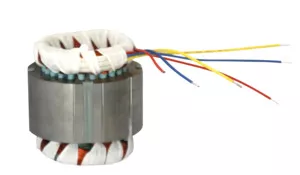
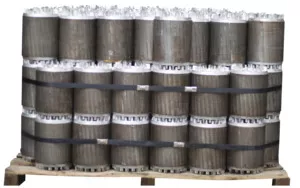
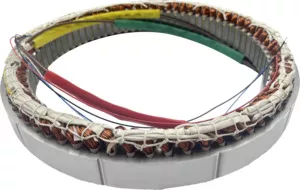
Every company above is a U.S. or Europe-based specialist in laminations specifically. Vanguard Technologies, based in Ningbo, China, is worth considering for a different reason: it's a single supplier that covers permanent magnets, magnetic assemblies, motor laminations, and complete rotor/stator assembly under one roof.
For buyers who currently source magnets from one vendor, laminations from another, and rotor/stator assembly from a third, that fragmentation adds lead time and coordination overhead at every handoff. Vanguard's Motor Solutions line — which includes standard and inner-runner laminations, precision machining, and full rotor and stator assembly — is built to sit alongside its NdFeB, ferrite, and SmCo magnet production, so a customer can consolidate a multi-component motor core into one supply relationship instead of three.
The company backs this with in-house engineering support — FEA simulation, design-for-manufacturability review, reverse engineering, and rapid prototyping — aimed at customers who need help validating a design before committing to tooling, not just a shop that stamps parts. With 15+ years in magnetics and motor components and an established sales and after-sales network across Europe, the Americas, Asia, and Africa, Vanguard is a reasonable option to include in an RFQ round if your project would benefit from consolidating magnet and lamination sourcing, or if you're deliberately diversifying supply chain outside a purely domestic footprint.
U.S. vs. Overseas Lamination Sourcing: How to Decide
Neither option is universally "better" — the right choice depends on what your program actually needs:
Lean U.S.-based if
Your program requires ITAR registration, AS9100D, or NADCAP certification; you're building for defense, aerospace, or other regulated end markets; or lead time and shipping predictability outweigh unit cost.
Add an overseas supplier if
You're cost-sensitive on high-volume commercial or industrial motor programs, want to consolidate magnet and lamination sourcing into fewer relationships, or are deliberately diversifying supply chain outside a single region.
Many motor manufacturers end up running both — a domestic supplier for regulated or time-critical programs, and an overseas partner for cost-driven or magnet-plus-lamination consolidated sourcing.
Frequently Asked Questions
What are motor laminations and why do they matter?
Motor laminations are the thin metal sheets — typically silicon steel, cobalt-iron, or nickel alloy — that are stacked and bonded together to form the core of a motor's rotor and stator. Using thin, insulated layers instead of a single solid core reduces eddy current losses, which directly improves motor efficiency, reduces heat, and extends service life.
What's the difference between rotor and stator laminations?
Stator laminations form the stationary outer core that holds the motor's windings; rotor laminations form the rotating inner core. Both are cut from the same family of electrical steel, but their geometry, slot design, and sometimes material grade differ based on the motor's electromagnetic design.
What materials are commonly used for motor laminations?
Non-oriented silicon (electrical) steel, in grades such as M15 through M45, covers most industrial and commercial motors. Cobalt-iron and nickel alloys are used where higher flux density or lower core loss is required, such as in aerospace and defense applications, and generally cost significantly more than standard electrical steel.
Stamping, laser cutting, or chemical etching — which should I choose?
Progressive-die stamping is the most cost-effective process at high volumes but requires upfront tooling investment. Laser cutting and photochemical etching skip hard tooling entirely, making them faster and cheaper for prototypes, design iteration, or low-volume runs, but they're typically less economical once a program scales into the hundreds of thousands or millions of units.
What certifications should I look for in a lamination supplier?
ISO 9001 is the standard baseline. For aerospace and defense programs, look for AS9100D and ITAR registration; for automotive, IATF 16949; and for specialized heat treating or welding processes, NADCAP accreditation.
Should I source motor laminations domestically or overseas?
It depends on your program's certification requirements, cost sensitivity, and how much of your motor's supply chain you want to consolidate with one supplier. See the "U.S. vs. Overseas Sourcing" section above for a fuller breakdown.
Final Thoughts
There's no single "best" motor lamination manufacturer — the right choice depends on your certification requirements, volume, materials, and how much of your motor supply chain you want under one roof. Use the comparison table above as a starting point, request quotes from two or three suppliers that match your specific requirements, and confirm current certifications and capacity directly before committing to tooling.
If your project involves both magnets and motor laminations — or if you're evaluating a second-source supplier outside the U.S. — get in touch with Vanguard Technologies for a quote covering laminations, precision machining, or full rotor/stator assembly.
0
Comments
Leave a Comment
Your email address will not be published. Required fields are marked *
Name can't be empty
Email error!
Message can't be empty
😍
😜
😳
😌
😄
😘
😝
😒
😃
😚
😚
😛
😟
😧
😀
😉
😓
😱
😤
😣
😂
😥
😩
😠
😢
😭
😰
😨
😡
😆
😪
😅
😐
😇
😋
😴
👿
😕
😏
😷
😵
😟
😮
😯
😑
👧
👴
😧
😬
😾
👶
👱
👵
👸
🙀
👺
👦
👩
👨
😽
😿
🙈
💩
💥
💤
😼
😹
🙉
🔥
✨
💦
👎
✌
👆
👈
💪
💹
👍
👊
💴
💶
💷
💸
👉
💵
🙏
🌎
🏧
👏
💳
👇
💑
🙆
🙅
💁
👫
👭
🙎
🙇
👑
👔
Submit Comment
Most Popular
-
 Jul 10, 2026Top 10 Custom Magnetic Assemblies Factory in the USA 2026
 -
 Jul 17, 2026Top 8 Motor Laminate Manufacturers in the USA 2026


Laster Blogs
Set A Consultation Today
Name can't be empty
Email error!
Send Your Message
*We respect your confidentiality and all
information are protected.