Product Overview
Coaxial Magnetic Couplings
Coaxial magnetic couplings are non-contact torque transmission assemblies in which an inner magnet rotor and an outer magnet rotor share the same rotational axis. Torque is transferred through a radial magnetic field across an air gap or containment barrier, allowing the driven side to remain physically separated from the driving side.
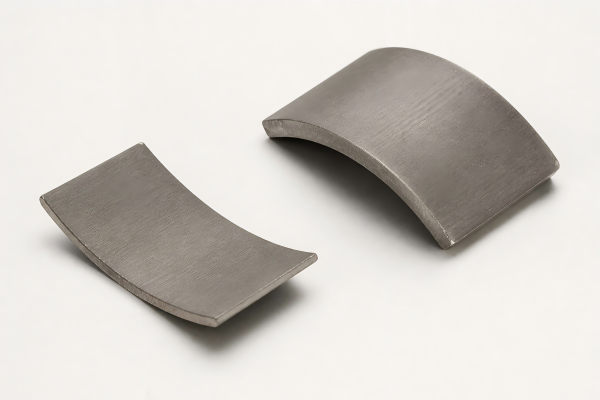
A typical coaxial magnetic coupling includes an inner rotor, an outer rotor, arc magnets or segmented permanent magnets, stainless or alloy sleeves, adhesive, protective coatings, optional isolation can and final torque, polarity, runout and balance inspection. This structure is widely used for sealed pumps, mixers, agitators, dosing systems and equipment where leakage, wear or dynamic seal maintenance must be reduced.
Ningbo Vanguard Technologies supplies customized coaxial magnetic couplings using NdFeB, SmCo or ferrite magnets according to required rated torque, slip torque, rotor diameter, air gap, containment wall thickness, speed, temperature, corrosion environment and installation space. We support magnetic circuit review, pole count selection, rotor machining, magnet bonding, sleeve assembly, torque verification and batch production.
Whether you need prototype magnetic drive couplings for pump validation or stable mass-production coaxial coupling assemblies for OEM equipment, Vanguard can provide sample assemblies within 10-20 days after torque target, drawing, magnet grade, gap and inspection requirements are confirmed.
Quick View
Coaxial Magnetic Coupling Selection Snapshot
Coaxial
Inner & Outer Rotor Layout
The inner and outer magnet rotors share one axis and transfer torque across a radial magnetic gap.
No Contact
Wear-Free Drive
Torque is transmitted magnetically without direct mechanical contact between the two rotors.
Sealed
Isolation Barrier Compatible
Suitable for magnetic drive pumps and sealed systems using stainless, plastic or ceramic containment cans.
10-20 Days
Prototype Lead Time
Fast sampling after torque, speed, air gap, magnet grade and rotor interface are confirmed.
Coaxial Coupling Design Focus
1Torque ReviewRated torque, slip torque
2Gap CheckRadial gap, can thickness
3Pole LayoutMagnet arc, pole count
4Rotor AssemblyBonding, sleeve, balance
5Final TestTorque, flux, runout
Key Applications
Magnetic Drive Pumps
Coaxial magnetic couplings for chemical pumps, water pumps, dosing pumps and leak-free circulation systems.
Chemical Processing
Sealed torque transmission for corrosive, hazardous, high-purity or difficult-to-seal fluids.
Mixers & Agitators
Non-contact coaxial drive solutions for sealed tanks, laboratory mixers and pharmaceutical equipment.
Vacuum & Pressure Systems
Torque transfer through isolation barriers for chambers, pressure housings and sealed mechanical modules.
Medical & Laboratory Devices
Clean, sealed and low-wear coaxial coupling assemblies for analytical instruments and compact pumps.
OEM Drive Modules
Custom coaxial magnetic coupling modules for automation, fluid handling and special-purpose machinery.
Technical Data
Typical Coaxial Coupling Specifications
The following options are commonly used for custom coaxial magnetic couplings. Final specifications are confirmed according to required torque, operating speed, radial air gap, isolation can thickness, working temperature and installation space.
|
Item |
Available Options |
Engineering Notes |
|
Coupling Layout |
Inner rotor + outer rotor, cup-type coaxial coupling, radial-gap coupling |
Coaxial layout is selected when input and output shafts share one axis or torque passes through a cylindrical barrier. |
|
Torque Range |
Prototype low torque to custom high torque assembly |
Torque depends on magnet volume, rotor diameter, pole count, air gap, temperature and magnetic material. |
|
Magnet Material |
NdFeB, SmCo, ferrite |
NdFeB provides high torque density; SmCo is preferred for high temperature or corrosion risk; ferrite is economical for lower torque. |
|
Magnet Shape |
Arc segment, tile magnet, block magnet, ring magnet, multipole ring |
Arc magnets usually improve radial coupling coverage and torque smoothness. |
|
Pole Count |
2-pole to multi-pole custom layout |
Pole count affects torque ripple, synchronous stability, rotor diameter and assembly complexity. |
|
Isolation Barrier |
Stainless steel can, plastic tube, ceramic sleeve, customer housing |
Barrier thickness and material strongly affect torque and eddy current loss. |
|
Rotor Material |
Stainless steel, carbon steel, aluminum alloy, engineering plastic |
Material is selected by strength, corrosion, magnetic circuit behavior, weight and machining route. |
|
Inspection |
Dimension, polarity, flux, torque, runout, balance, coating |
Inspection records can be provided for prototype validation and mass-production control. |
Structure Comparison
Coaxial Coupling Structure Options
|
Structure |
Magnetic Layout |
Best Fit |
Design Attention |
|
Radial Coaxial Coupling |
Inner rotor and outer rotor with radial magnetic gap |
Pumps, sealed drives, compact coaxial shaft systems |
Air gap, pole alignment, radial runout and containment wall thickness. |
|
Cup-Type Magnetic Coupling |
Outer cup rotor surrounds inner magnet rotor |
Magnetic drive pumps and sealed rotating equipment |
Cup strength, can clearance, magnet bonding and dynamic balance. |
|
High-Torque Coaxial Coupling |
Larger diameter, longer magnet stack or optimized pole count |
Industrial pumps, mixers and heavy-duty sealed drives |
Rotor strength, sleeve retention, heat generation and assembly safety. |
|
Miniature Coaxial Coupling |
Small inner / outer rotor with precision magnets |
Medical devices, analytical instruments, miniature pumps |
Precision machining, small air gap, adhesive control and magnet handling. |
|
High-Temperature Coaxial Coupling |
SmCo or high-temperature NdFeB magnet system |
Hot fluid pumps, ovens, chemical equipment and harsh environments |
Magnet grade, adhesive, coating and rotor material must all match temperature. |
Engineering Selection
Design Points for Coaxial Magnetic Couplings
Torque & Slip Margin
Rated torque, startup torque, overload condition and slip torque should be defined before magnet volume and pole count are selected.
Radial Air Gap
Torque drops quickly as radial gap increases. Barrier thickness, rotor runout and assembly tolerance must be reviewed together.
Containment Can
Metal containment cans can create eddy current heating. Material, thickness, pressure and corrosion requirements should be balanced.
Rotor Strength
High-speed coaxial couplings require sleeve retention, bonding strength, balance, runout and centrifugal stress review.
Quality Control
Manufacturing & Inspection Capability
Magnet Assembly
Arc magnet bonding, polarity orientation, fixture assembly and protective sleeve integration for inner and outer rotors.
Mechanical Inspection
Rotor OD / ID, concentricity, runout, shaft fit, clearance and containment interface can be inspected before shipment.
Magnetic Verification
Polarity, flux distribution, torque direction and coupling performance can be verified according to agreed test conditions.
Balance & Reliability
Dynamic balance, adhesive cure, coating, sleeve retention and packaging are controlled for stable rotating operation.
Request a Quote
Information Needed for Fast Quotation
To speed up engineering review, please provide a drawing or confirm the specifications below. If the coupling will be used with a containment can, pump chamber or existing shaft system, interface drawings are especially helpful.
-
Rated torque, startup torque, slip torque and operating speed
-
Inner rotor size, outer rotor size, shaft interface and available installation space
-
Radial air gap, containment can material, wall thickness and pressure condition
-
Working temperature, fluid environment, corrosion risk and magnet coating requirement
-
Sample quantity, annual volume, inspection requirement, packaging and delivery schedule
Support
Frequently Asked Questions
What makes a magnetic coupling coaxial?
The inner rotor and outer rotor share the same axis, and torque is transferred across a radial magnetic gap. This is different from face-to-face axial couplings where the two magnet faces oppose each other axially.
Can coaxial magnetic couplings work through a sealed wall?
Yes. They are often used with stainless, plastic or ceramic containment cans. The barrier material and thickness must be included in the torque design because they increase magnetic gap and may create heating.
What happens if the load exceeds the slip torque?
The magnetic poles lose synchronous lock and the coupling slips. This can protect the drive train, but repeated slip can cause heat and should be considered in design.
Can the coupling be customized for high temperature or corrosive fluids?
Yes. SmCo magnets, high-temperature NdFeB, stainless encapsulation, special coatings and corrosion-resistant rotor materials can be reviewed according to temperature, fluid and service life requirements.