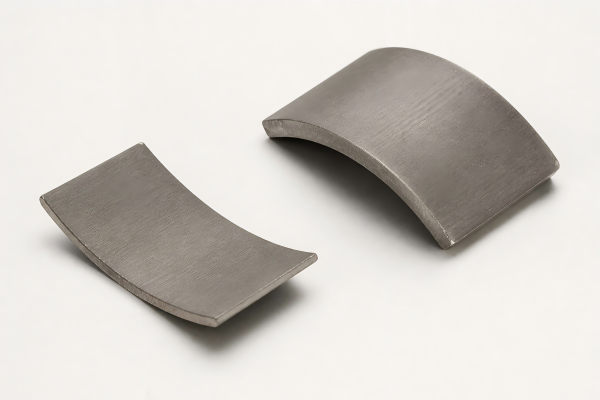
Outer Runner Laminations
Contact Us Now
Outer runner laminations are precision-stamped electrical steel laminations used in outer rotor motors, outrunner BLDC motors, hub motors, fans, pumps, drones and compact high-torque drive systems. The lamination stack forms the magnetic path for the stator or rotor structure, helping control iron loss, torque density, cogging, temperature rise and motor efficiency.
Compared with solid steel cores, laminated electrical steel reduces eddy current loss and improves high-frequency performance. For outer runner motor designs, lamination geometry, slot shape, tooth width, yoke thickness, material grade, insulation coating and stacking accuracy must be matched with the magnet rotor, winding scheme and target speed.
Ningbo Vanguard Technologies supplies custom outer runner laminations and lamination stacks using silicon steel, non-oriented electrical steel and custom alloy materials. We support stamping, laser cutting for prototypes, progressive die production, stacking, welding, bonding, interlocking, insulation coating review and dimensional inspection.
Whether you need prototype laminations for motor validation or high-volume lamination stacks for production, Vanguard can provide engineering review and sample production within 10-25 days after drawing, material grade, stack height and tolerance requirements are confirmed.
The following lamination structures are commonly used in outer runner motor projects. Final material, slot geometry, stack height and tolerance are confirmed according to drawing and motor performance requirements.
| Lamination Type | Typical Material | Sheet Thickness | Stacking Method | Key Feature | Typical Application |
|---|---|---|---|---|---|
| Outer Runner Stator Core | Non-oriented silicon steel | 0.20-0.50 mm | Interlock, weld, bond | Slot geometry optimized for concentrated winding | Outrunner BLDC motors, fans, pumps |
| Low-Loss High-Speed Stack | 20W / 27W / 35W series steel | 0.20-0.35 mm | Bonded or welded stack | Reduced iron loss for high-frequency operation | Drones, high-speed fans, compact drives |
| Hub Motor Lamination | 35W / 50W series steel | 0.35-0.50 mm | Welded or riveted stack | Large diameter, high torque and stable yoke design | E-bike motors, scooter motors, wheel motors |
| Segmented Lamination Stack | Electrical steel segment | 0.20-0.50 mm | Segment bonding or fixture assembly | Improves material utilization and winding access | Large OD motors, custom stator assemblies |
| Prototype Laser-Cut Lamination | Silicon steel / custom alloy | 0.20-0.50 mm | Loose or bonded prototype stack | Fast validation before progressive die tooling | Motor R&D, sample testing, design iteration |
| Insulated Lamination Stack | Coated electrical steel | 0.20-0.50 mm | Bonding, interlock, weld | Controlled interlaminar insulation and stack height | Efficient BLDC motors and generators |
Vanguard can customize lamination profiles, prototype stacks and production lamination stacks. The table below summarizes common specification items for engineering review.
| Item | Available Options | Engineering Notes |
|---|---|---|
| Material | Non-oriented silicon steel, low-loss electrical steel, custom alloy | Selected according to iron loss, saturation flux density, frequency and cost target. |
| Thickness | 0.20 mm, 0.27 mm, 0.35 mm, 0.50 mm or custom | Thinner sheets reduce eddy current loss but increase stacking complexity and cost. |
| Manufacturing Process | Laser cutting, wire cutting, stamping, progressive die production | Laser cutting is suitable for prototypes; progressive tooling is preferred for volume production. |
| Stacking Method | Loose stack, interlock, riveting, welding, bonding, self-bonding steel | Stacking method affects strength, insulation, dimensional stability and tooling cost. |
| Geometry | Outer diameter, inner diameter, slot number, tooth width, yoke thickness, keyway | Geometry should be matched with winding, magnet pole count, air gap and thermal design. |
| Surface / Insulation | Factory insulation coating, oxide layer, varnish, bonding coating | Interlaminar insulation reduces eddy current paths and improves core performance. |
| Inspection | Dimension, burr height, flatness, stack height, runout, coating condition | Inspection method is customized by motor speed, air gap and assembly process. |
| Factor | Influence on Performance | Recommended Check |
|---|---|---|
| Steel Grade | Controls iron loss, saturation and efficiency at working frequency. | Choose material based on speed, frequency and thermal target. |
| Sheet Thickness | Thinner sheets reduce eddy current loss but increase cost and stack count. | Balance efficiency target and manufacturing budget. |
| Burr Height | High burr may damage insulation and create interlaminar short paths. | Define burr limit and deburring requirement for production. |
| Stack Method | Welding, riveting, interlock and bonding affect strength and magnetic loss differently. | Select the method according to motor speed, assembly and efficiency requirement. |
| Air Gap Surface | Roundness and runout influence magnetic uniformity, noise and torque ripple. | Control concentricity and final stack geometry after assembly. |
Vanguard can customize outer diameter, inner diameter, slot number, tooth profile, yoke thickness, mounting notch, material grade, sheet thickness, stack height, stacking method and inspection standard. For new motor projects, we can support prototype lamination sets before stamping tooling investment.
Process support: We provide laser-cut samples, stamping production, progressive die development, interlocking, welding, bonding, stack height control and protective packaging.
Engineering review: If the project involves high speed, low noise, tight air gap or high efficiency, our engineering team can review material, burr control, insulation and stack process before sampling.
Production begins with drawing review, material selection and process planning. Prototype laminations can be laser cut or wire cut, while mass-production laminations are usually produced by stamping or progressive die tooling for stable dimensions and cost control.
Finished laminations are stacked by interlocking, welding, bonding, riveting or customer-specified methods, then inspected for dimensions, burr, stack height, flatness and appearance before packing.
Dimensional inspection: OD, ID, slot shape, tooth width, yoke thickness, keyway, stack height, roundness and runout are checked per drawing.
Process inspection: Burr height, flatness, stacking direction, weld position, bonding condition and interlock quality can be inspected by requirement.
Material verification: Electrical steel grade, sheet thickness, insulation coating and material certificate can be provided for production traceability.
Documentation: Material certificate, inspection report, dimensional report, RoHS/REACH declaration and lot traceability records are available.
To speed up engineering review, please provide a 2D/3D drawing or confirm the specifications below. If the design is still under development, Vanguard can help compare laser-cut prototype and stamping production options.