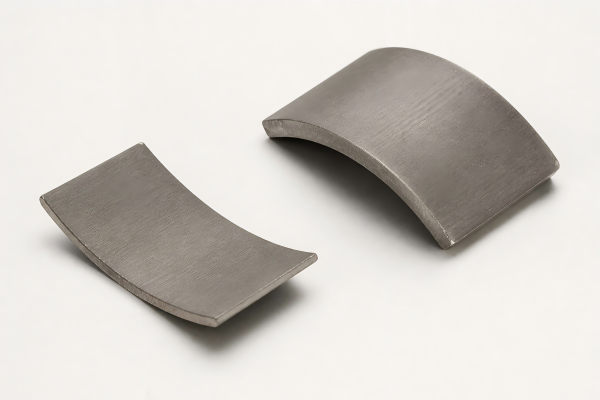
DFM & Moldflow Review
Evaluate wall thickness, draft, ribs, bosses, weld lines, air traps, shrinkage, warpage and practical gate locations.
Engineering Services
Engineering-led tooling and molded-part production from DFM review to stable serial supply.
Vanguard supports custom plastic components, insert-molded parts and finished assemblies for motor, magnetic, industrial and electromechanical applications. We coordinate part design, resin selection, tooling, trials, process windows, inspection and secondary operations around measurable requirements.


From Drawing to Production
Tooling quality matters, but the mold alone does not guarantee a stable component. Polymer behavior, geometry, gate location, cooling balance, process settings and measurement methods all affect the final result.
We review the intended function and assembly before defining the tool. Critical dimensions, cosmetic surfaces, load paths, inserts, mating components and expected annual demand become inputs to the manufacturing plan.
Service Scope
Support can be configured for a single molded component or an assembled production module.
Evaluate wall thickness, draft, ribs, bosses, weld lines, air traps, shrinkage, warpage and practical gate locations.
Develop cavity layout, parting line, runner, cooling, venting, ejection and replaceable wear details around tool life and volume.
Mold around threaded inserts, terminals, pins, bushings or magnetic components with controlled location and retention.
Combine rigid substrates and elastomeric materials where chemical compatibility, mechanical locking and adhesion are validated.
Coordinate machining, printing, laser marking, painting, plating, ultrasonic welding, fastening and functional assembly.
Define first-article reports, appearance standards, dimensional checks, functional tests, packaging and production traceability.
Project Workflow
Each gate closes a specific technical risk before the next investment or production step.
Confirm function, assembly, files, material, tolerance, finish, quantity and validation needs.
Identify molding risks and agree on tool concept, cavity count, scope, timing and acceptance criteria.
Release the mold after reviewing parting, gates, cooling, venting, ejection and steel-safe dimensions.
Evaluate filling, appearance, dimensions and tool function using documented process conditions.
Adjust tool or process, validate critical dimensions and approve material, color and appearance standards.
Lock the process window, inspection plan, traceability, packaging and change-control requirements.
Materials
Final resin selection must reflect strength, temperature, wear, chemicals, moisture, appearance and regulatory needs.
| Material | Useful Characteristics | Typical Applications | Engineering Considerations |
|---|---|---|---|
| ABS | Tough, economical and appearance-friendly | Housings, covers and appliance parts | Review chemical exposure, UV, plating and cosmetic texture. |
| PC | High impact strength and useful heat resistance | Protective covers and strong housings | Drying, residual stress and mold temperature require control. |
| PA / Nylon | Strength, toughness and wear resistance | Gears, brackets, clips and structural parts | Moisture conditioning and anisotropic shrinkage affect dimensions. |
| POM | Low friction and good dimensional stability | Gears, sliders, bushings and mechanisms | Ventilation and processing temperature must be controlled. |
| PP / PE | Low density and chemical resistance | Caps, covers, containers and living hinges | Shrinkage, low surface energy and stiffness must be considered. |
| TPE / TPU | Elasticity, grip and impact absorption | Seals, grips, boots and overmolding | Hardness, adhesion and compression behavior need validation. |
| PBT / PPS | Electrical, thermal and dimensional performance | Connectors and demanding industrial components | Drying, mold temperature, fiber orientation and cost require review. |
| GF-Reinforced Resin | Higher stiffness and reduced creep | Structural brackets and motor components | Fiber direction, warpage, surface texture and tool wear are important. |
DFM Priorities
These decisions have a direct effect on tooling changes, visual defects and batch repeatability.
Keep walls as uniform as practical and use gradual transitions. Core out thick regions to reduce sink, voids and long cooling cycles.
Provide sufficient draft for the material and texture. Distribute ejection forces away from appearance surfaces and weak features.
Place gates with weld lines, fiber orientation, pressure loss, cosmetics and balanced filling in mind. Vent likely air traps.
Define functional datums and critical features before tooling. Leave steel-safe adjustment where prediction uncertainty is significant.
Quality Planning
A stable process window is more valuable than a single acceptable trial sample.
| Control Area | Risk If Uncontrolled | Recommended Evidence |
|---|---|---|
| Incoming Resin | Wrong grade, moisture, contamination or color variation | Material identification, batch traceability and drying records. |
| Machine Setup | Unstable filling, flash, short shot or inconsistent shrinkage | Approved parameter window, setup sheet and first-off verification. |
| Mold Temperature & Cooling | Warpage, stress, poor surface or long cycle | Temperature monitoring, cooling maintenance and cycle control. |
| Critical Dimensions | Assembly interference or accumulated tolerance failure | Datum-based inspection, calibrated gauges and capability monitoring. |
| Appearance | Color, gloss, weld-line, gate or texture disputes | Approved boundary samples, viewing conditions and defect limits. |
| Tool Maintenance | Flash, wear, blocked vents, cooling loss or unplanned downtime | Shot count, preventive maintenance plan and repair history. |
Production Evidence
Images show typical injection molding activities and are provided as process references.


RFQ Support
Send your files and production assumptions so the project can be reviewed against function, tooling and total cost.
Contact VanguardProvide STEP or other 3D data, a 2D drawing, resin and color requirements, finish, annual quantity, critical tolerances, assembly needs, validation requirements and the target schedule.
Yes. The review can cover wall thickness, draft, ribs, bosses, parting lines, gates, weld lines, shrinkage, warpage, ejection, inserts and assembly interfaces.
Projects can include threaded inserts, terminals, pins, bushings, magnets and rigid-to-soft overmolding. Insert retention, temperature compatibility and material bonding must be validated.
Critical features should be tied to functional datums and an agreed measurement method. Tool adjustment, process capability, conditioning or secondary machining may be required for demanding dimensions.
Material condition, machine setup, mold temperature, fill and pack conditions, cooling, tool maintenance and inspection must be managed within an approved process window.
Secondary operations can include printing, painting, laser marking, plating, ultrasonic welding, fastening, functional assembly, inspection and production packaging.
Send the 3D file, drawing, material, finish, quantity and critical requirements for a manufacturability review.