Product Overview
Injection Molded NdFeB Magnets
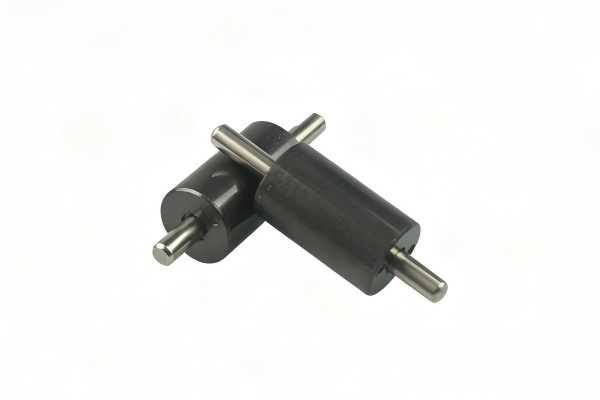
Injection molded NdFeB magnets are bonded neodymium magnets made by compounding NdFeB magnetic powder with a thermoplastic binder such as PA, PPS or other engineering plastics, then injecting the compound into a precision mold. This process enables complex shapes, thin walls, inserts, gears, hubs, shafts and integrated magnetic components that are difficult to produce with conventional sintered magnets.
Compared with compression molded NdFeB magnets, injection molded magnets provide greater shape freedom, better integration with plastic or metal parts, shorter cycle time and excellent repeatability for high-volume production. They are especially suitable for sensor magnets, encoder rings, automotive electronic components, micro motors, pump rotors, magnetic gears and compact magnetic assemblies.
Ningbo Vanguard Technologies supplies custom injection molded NdFeB magnets with different resin systems, magnetic powder grades, shapes and magnetization patterns. Our engineering team supports material selection, mold development, insert design, magnetic simulation review, prototype sampling and mass production with stable dimensions and repeatable magnetic output.
Parts can be supplied as molded magnets, overmolded magnets, insert-molded rotors, sensor rings or complete magnetic assemblies. Typical sample lead time is 10–15 working days after drawing and tooling review.
Quick View
Injection Molded NdFeB Magnet Selection Snapshot
Bonded NdFeB
Injection Molded Material
NdFeB powder compounded with PA, PPS or other engineering plastics for integrated magnetic components.
Complex Shape
High Design Freedom
Suitable for gears, hubs, shafts, inserts, thin-wall rings and overmolded magnetic assemblies.
Multi-Pole
Flexible Magnetization
Precise pole distribution for sensor magnets, encoder rings, pump rotors and motor components.
10-15 Days
Prototype Sample Lead Time
Fast sampling after drawing, resin system, grade and magnetization fixture are confirmed.
Material Selection Guide
PPS Binder
Heat resistance
High Loading
Magnetic output
Insert Molded
Integration
Application Demand Focus
Encoder Rings
Pole accuracy
Consumer Devices
Compact size
1Drawing ReviewShape, insert, tolerance, assembly fit
2Material MatchPowder, resin, loading ratio
3Mold PlanTooling, gate, insert, shrinkage
4MagnetizationAxial, radial, multi-pole fixture
5InspectionFlux, size, polarity, appearance
Key Applications
Sensor Magnets
Used in Hall sensors, angle sensors, speed sensors and position detection systems where integrated shapes and repeatable magnetic signals are required.
Encoder Rings
Injection molded rings support multi-pole magnetization, reference marks, plastic carriers and accurate pole distribution for rotary encoder applications.
Automotive Electronics
Applied in actuators, small pumps, seat motors, HVAC systems, electronic throttle components and smart sensor modules requiring stable mass production.
Magnetic Rotors
Ideal for integrated rotor components where the magnet is molded directly around a shaft, sleeve, gear or plastic carrier to reduce assembly steps.
Office Automation
Used in printers, scanners, copiers, paper-feed mechanisms and toner motors requiring compact molded parts and repeatable magnetic performance.
Consumer Devices
Suitable for personal care products, smart appliances, meters, miniature mechanisms and magnetic modules that require lightweight integrated parts.
Grade & Magnetic Properties
Typical grades for injection molded NdFeB magnets. Values are for reference at 20 °C; final performance depends on magnetic powder type, resin system, powder loading ratio, molding condition, part geometry and magnetization fixture.
Typical Physical Properties
|
Parameter |
Unit |
Typical Value |
|
Density |
g/cm3 |
4.5–5.6 depending on powder loading |
|
Binder System |
– |
PA6 / PA12 / PPS / custom engineering plastic |
|
Electrical Resistivity |
Ω·cm |
High, suitable for low eddy-current loss |
|
Working Temperature |
°C |
Typically 120–150 °C, resin dependent |
|
Corrosion Resistance |
– |
Good due to polymer binder; coating available for harsh environments |
|
Process Advantage |
– |
Complex shape, insert molding and high-volume repeatability |
Magnetization Orientations Available
Diametrical Magnetization
Dimension Capability
Injection molding is suitable for complex profiles, thin-wall rings, integrated gears, shaft inserts, plastic carriers and parts with positioning features. Mold design should consider flow path, demolding direction, shrinkage, insert retention and magnetization fixture access.
|
Item |
Capability |
Notes |
|
Outer Diameter / Length |
2–150 mm typical |
Larger sizes reviewed by mold and injection capacity |
|
Wall Thickness |
Thin-wall and complex parts available |
Confirmed by flow, strength and powder loading |
|
Standard Tolerance |
±0.05 mm to ±0.15 mm |
Depends on resin, size, mold and critical dimensions |
|
Integrated Features |
Gear, hub, shaft insert, slot, keyway, marker, carrier |
Designed for assembly and magnetization inspection |
Design Support
How to Specify Injection Molded NdFeB Magnets
Material System
Choose resin and magnetic powder based on working temperature, mechanical strength, humidity exposure, magnetic output and cost target.
Mold & Insert Design
Confirm insert position, flow direction, gate location, shrinkage, critical dimensions and demolding direction before tooling.
Magnetization Pattern
Define pole count, pole width, phase angle, reference mark, waveform requirement and inspection method for multi-pole rings and sensor magnets.
Custom Manufacturing
Available Custom Features
Ring, disc, sleeve, gear, rotor, sensor wheel, overmolded insert, thin-wall part and custom 3D profile.
Encoder, motor rotor, sensor ring, actuator, pump rotor and magnetic module.
PA, PPS, custom engineering plastic, color marking, surface coating and protective packaging.
Temperature resistance, humidity protection, visual identification and assembly compatibility.
Shaft insert, metal hub, plastic carrier, bonding, balancing, polarity marking and packed-by-pole direction.
Reducing customer assembly steps and improving consistency of magnetic sub-assemblies.
Production Control
Manufacturing & Quality Assurance
The production process includes NdFeB powder preparation, thermoplastic compounding, pelletizing, injection molding, insert molding if required, finishing, coating if required, magnetization and final inspection. Key controls include powder loading, melt flow, mold temperature, shrinkage, insert retention, magnetization fixture and batch traceability.
Magnetic Inspection
Surface flux, pole count, pole angle, phase position, magnetic waveform and batch consistency can be inspected according to project requirements.
Dimensional Inspection
OD, ID, thickness, concentricity, runout, insert position, gear profile, flatness and critical assembly dimensions are checked before shipment.
Documentation
Material certificate, magnetic report, dimensional report, coating report, RoHS/REACH documents and PPAP-style documents are available on request.
Fast Quotation
Information Needed for Fast Quotation
For faster engineering review, please provide drawing or 3D file, target grade or surface flux, critical dimensions and tolerance, resin requirement, magnetization direction, pole count or waveform requirement, working temperature, insert or assembly requirement, sample quantity and annual volume. If the material is not fixed, our team can recommend an injection molded NdFeB solution based on magnetic output, geometry and cost target.
Frequently Asked Questions
What is the difference between injection molded and compression molded NdFeB?
Injection molded NdFeB uses thermoplastic binder and is better for complex shapes, insert molding and high-volume integrated parts. Compression molded NdFeB generally offers higher magnetic output but less design freedom.
Can injection molded NdFeB magnets be multi-pole magnetized?
Yes. Multi-pole magnetization is widely used for encoder rings, sensor magnets and small motor rotors. Pole count, phase angle and waveform should be defined before fixture development.
Can metal shafts or plastic carriers be molded together with the magnet?
Yes. Insert molding is one of the main advantages of this process. Shafts, hubs, bushings, gears and plastic carriers can be integrated depending on design and tooling feasibility.
Do injection molded magnets require coating?
The polymer binder provides good corrosion resistance. Coating or special resin is recommended for high humidity, salt spray, chemical exposure or long-life outdoor applications.
What is the lead time for custom injection molded NdFeB magnets?
Prototype timing depends on tooling and material selection. Typical sample preparation is 10–15 working days after tooling and drawing confirmation; mass production depends on mold complexity, quantity and inspection requirements.