Magnet Adhesive Bonding Process for Motor Rotor Assemblies

Ningbo Vanguard Technologies Co., Ltd
Magnet Adhesive Bonding Process for Motor Rotor Assemblies
Practical engineering guidance for bonding NdFeB, SmCo and ferrite magnets onto rotor cores, sleeves and magnetic assemblies with controlled strength, air gap accuracy and production repeatability.
Why Magnet Bonding Is a Critical Rotor Process
In a permanent magnet rotor, adhesive is not only a positioning material. It is part of the mechanical retention system, thermal path and corrosion protection strategy. A weak or inconsistent bonding process can cause magnet movement, air gap variation, noise, imbalance, demagnetization risk or rotor failure at speed.
For engineering teams, the key is to treat magnet bonding as a controlled manufacturing process rather than a simple gluing operation. Magnet geometry, coating, adhesive chemistry, surface roughness, fixture design, curing profile and inspection method must be defined together.
Design Points for Rotor Magnet Bonding
Adhesive StrengthShear strength, peel resistance and fatigue performance must match rotor speed, magnet mass and sleeve design.
Bond Line ControlExcessive adhesive thickness changes air gap and rotor balance; too little adhesive reduces contact area.
Surface PreparationCleaning, roughness and coating compatibility directly affect bonding stability and long-term reliability.
Curing RepeatabilityTemperature, pressure, fixture time and humidity control determine whether prototype results can scale to production.
Adhesive Selection Is Application-Specific
Epoxy, acrylic, anaerobic and silicone-based systems can all be used in magnetic assemblies, but they are not interchangeable. High-speed rotors usually need high shear strength, dimensional control and reliable heat resistance. Pump motors may require chemical resistance and moisture protection. Sensor magnets may prioritize low stress and precise positioning.
Magnet material also matters. NdFeB magnets are sensitive to corrosion and often use nickel, epoxy or phosphate coatings. SmCo magnets offer better temperature stability but still require clean bonding surfaces. Ferrite magnets are more chemically stable, yet their ceramic surface may need process validation for consistent adhesion.
Engineering note: Bonding strength should be validated on the actual magnet coating and rotor substrate. Data from a generic adhesive datasheet is useful for screening, but it does not replace testing on the real production stack-up.
Common Adhesive Options
| Adhesive Type | Typical Advantage | Design Concern | Suitable Magnet Assemblies | Validation Focus |
|---|---|---|---|---|
| Two-Part Epoxy | High strength, good temperature resistance, strong gap filling ability | Mixing ratio, pot life, cure time and thermal expansion stress | Surface-mounted rotor magnets, magnetic couplings, stator magnet tracks | Shear strength, thermal aging, humidity resistance |
| Acrylic Adhesive | Fast curing and good adhesion to metal and coated magnets | Odor, surface sensitivity and high-temperature limits | Production rotor lines, fixtures, compact magnetic modules | Cure speed, vibration, coating compatibility |
| Anaerobic Adhesive | Useful in close-fitting metal interfaces | Requires limited oxygen and active metal contact | Magnet retaining rings, sleeves and threaded locking points | Gap size, cure condition, retention after heat cycling |
| Silicone Adhesive | Flexible, good damping and thermal cycling tolerance | Lower structural strength compared with epoxy | Sensor magnets, low-stress assemblies, encapsulated structures | Movement control, aging, outgassing risk |
Recommended Production Process
1CleanRemove oil, dust, plating residue and handling contamination from magnet and rotor surfaces.
2PrepareConfirm coating condition, roughness, chamfer and adhesive compatibility before dispensing.
3DispenseControl adhesive volume, bead position and bond line thickness using repeatable fixtures or tooling.
4CureApply controlled time, temperature and clamping conditions according to the adhesive system.
5InspectVerify position, air gap, bond overflow, pull/shear test, rotor balance and magnetic performance.
Image Gallery
Reference views for magnet bonding, rotor assembly, adhesive process review and production inspection planning.
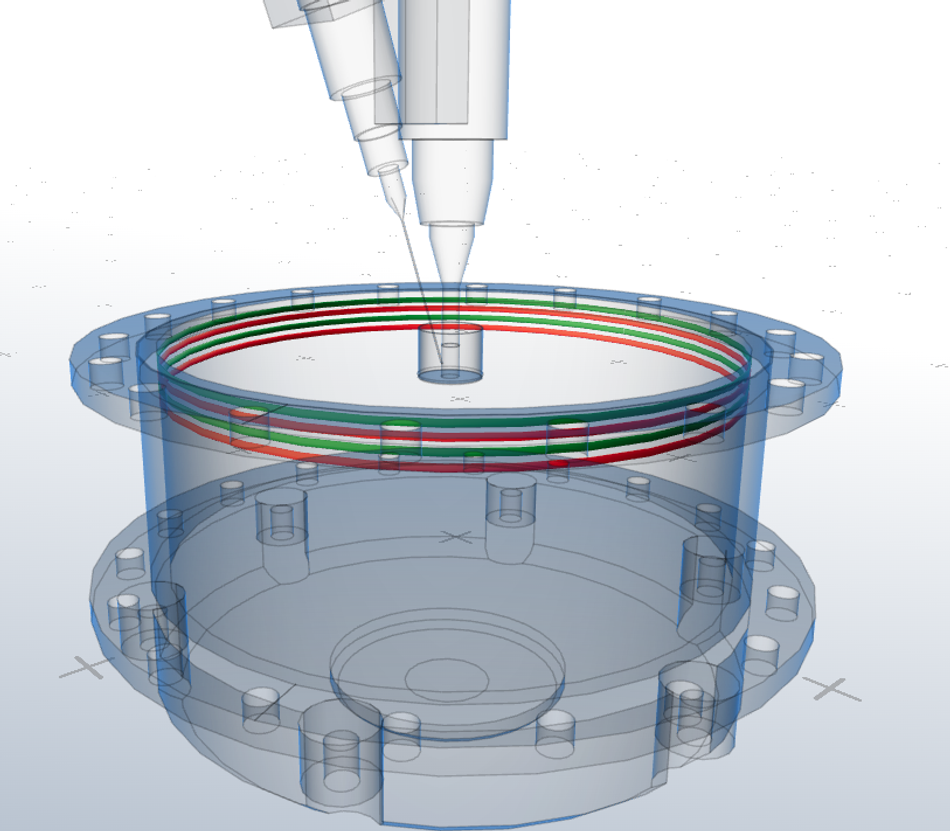 Adhesive dispensing process for electric motor magnet assembly.
 Permanent magnet rotor component for bonding and retention review.
 Rotor assembly manufacturing reference for magnet positioning control.
Process Controls That Reduce Rotor Risk
Rotor magnet bonding is sensitive to small process changes. Adhesive volume, magnet polarity orientation, fixture concentricity, sleeve clearance and curing temperature can all change the final rotor performance. For high-speed motors, the bonding process should be reviewed together with sleeve retention, rotor dynamic balance and thermal model assumptions.
Ningbo Vanguard Technologies Co., Ltd supports magnet selection, coating review, bonding process definition, fixture planning, prototype validation and production quality control for permanent magnet rotor assemblies.
Inspection Items for Bonded Magnet Rotors
| Inspection Item | Purpose | Typical Method | Risk Controlled |
|---|---|---|---|
| Magnet position and polarity | Confirm assembly orientation and magnetic circuit consistency | Fixture check, polarity mark, magnetic field scan | Torque ripple, assembly scrap, reversed magnet fault |
| Adhesive coverage | Confirm sufficient bonding area without excessive overflow | Visual inspection, weight control, section analysis on samples | Weak bond, air gap interference, rotor imbalance |
| Bond strength | Validate adhesion under expected mechanical load | Shear test, pull test, spin test on validated samples | Magnet detachment, vibration damage, safety failure |
| Thermal and humidity aging | Evaluate long-term reliability under service conditions | Heat cycling, damp heat, salt spray when required | Coating failure, adhesive degradation, corrosion |
| Rotor balance | Ensure assembly is suitable for operating speed | Dynamic balancing after bonding and curing | Noise, bearing load, efficiency loss, mechanical fatigue |
Information Needed for Fast Quotation
Rotor DrawingRotor OD, magnet slot or surface geometry, sleeve structure and tolerance requirements.
Magnet SpecificationMaterial, grade, coating, magnetization direction, quantity per rotor and polarity layout.
Operating ConditionSpeed, temperature, humidity, coolant, vibration and expected service life.
Production TargetPrototype quantity, pilot build quantity, annual volume and inspection standard.
FAQ
Can adhesive alone retain magnets in a high-speed rotor?
Sometimes, but high-speed rotors often need a sleeve, bandage or mechanical retention design in addition to adhesive. The correct approach depends on magnet mass, radius, speed, temperature and safety margin.
Which magnet coating is best for bonding?
There is no universal best coating. Epoxy, nickel, phosphate and other coatings can work when the adhesive and surface preparation are validated together. The real production surface should be tested before mass production.
Does adhesive thickness affect motor performance?
Yes. Bond line thickness can change magnet position and effective air gap. In precision motors, adhesive thickness should be included in dimensional stack-up and fixture design.
Can Vanguard provide only the bonding process review?
Yes. We can support process review, magnet and coating selection, prototype builds, fixture planning, failure analysis and full bonded magnet rotor assembly production.
Need support for bonded magnet rotor assemblies?
Send your rotor drawing, magnet specification, speed, operating temperature and production target. Our team can review adhesive, coating, fixture and inspection requirements for prototype or mass production.
Image sources: hero and rotor assembly images from Bakker Magnetics permanent magnet rotor assemblies page; adhesive application image from Wevolver electric motor adhesive article. Images were selected from visible no-watermark web results. For formal commercial publishing, please confirm usage rights with the source owners or replace them with company-owned product photography.
0
Comments
Leave a Comment
Your email address will not be published. Required fields are marked *
Name can't be empty
Email error!
Message can't be empty
😍
😜
😳
😌
😄
😘
😝
😒
😃
😚
😚
😛
😟
😧
😀
😉
😓
😱
😤
😣
😂
😥
😩
😠
😢
😭
😰
😨
😡
😆
😪
😅
😐
😇
😋
😴
👿
😕
😏
😷
😵
😟
😮
😯
😑
👧
👴
😧
😬
😾
👶
👱
👵
👸
🙀
👺
👦
👩
👨
😽
😿
🙈
💩
💥
💤
😼
😹
🙉
🔥
✨
💦
👎
✌
👆
👈
💪
💹
👍
👊
💴
💶
💷
💸
👉
💵
🙏
🌎
🏧
👏
💳
👇
💑
🙆
🙅
💁
👫
👭
🙎
🙇
👑
👔
Submit Comment
Most Popular
-
 Jul 21, 2026Top 8 Motor Laminations Manufacturers in the USA 2026
 -
 Jul 21, 2026Top 10 Electrical Lamination Manufacturers in the USA 2026
 -
 Jul 10, 2026Top 10 Custom Magnetic Assemblies Factory in the USA 2026
 -
 Jul 22, 2026Top 5 Rotor Assembly Manufacturers in the USA 2026


Laster Blogs


Set A Consultation Today
Name can't be empty
Email error!
Send Your Message
*We respect your confidentiality and all
information are protected.