High Temperature SmCo Magnets for Aerospace and Industrial Motors

Ningbo Vanguard Technologies Co., Ltd
High Temperature SmCo Magnets for Aerospace and Industrial Motors
Material and design guidance for engineers selecting samarium cobalt magnets in high-temperature motors, aerospace actuators, turbine generators, sensors and demanding magnetic assemblies.
Why SmCo Is Used in High-Temperature Motor Designs
Samarium cobalt magnets are selected when a motor or magnetic assembly must operate at elevated temperature while maintaining stable magnetic output. Compared with many NdFeB grades, SmCo offers stronger resistance to irreversible demagnetization, better thermal stability and improved corrosion resistance in demanding environments.
For aerospace actuators, turbine-related systems, downhole tools, high-speed industrial motors and precision sensors, the magnet is part of the reliability architecture. The correct SmCo grade, geometry, magnetization direction, coating and assembly method must be reviewed together rather than selected from a catalog line alone.
Design Points for High-Temperature SmCo Magnets
Temperature MarginGrade selection must account for peak operating temperature, heat soak, thermal cycling and emergency overload events.
Demagnetization ResistanceSmCo is useful when reverse field, narrow air gap, high current or high ambient temperature creates magnetic risk.
Mechanical StrengthSmCo is brittle, so chamfer, handling, bonding, sleeving and assembly tooling must be controlled.
Magnetic ConsistencyMotor performance depends on pole balance, magnetization accuracy and batch-to-batch stability.
SmCo1:5 and SmCo2:17 Selection
SmCo1:5 materials can provide strong temperature stability and good corrosion resistance, with relatively simple magnetization behavior. SmCo2:17 grades are commonly chosen when higher magnetic energy, better high-temperature performance and stronger resistance to demagnetization are required.
In motor projects, material selection should be based on operating point rather than maximum BHmax alone. Engineers should check working temperature, magnetic circuit load line, irreversible loss requirement, assembly stress and the final rotor or stator geometry.
Engineering note: High-temperature capability is not defined only by the magnet material. Adhesive, sleeve material, coating, insulation, rotor balance and the surrounding motor cooling design can become the limiting factors.
SmCo Magnet Design Comparison
| Design Factor | SmCo Advantage | Engineering Concern | Inspection Focus | Typical Motor Application |
|---|---|---|---|---|
| High operating temperature | Stable magnetic output under elevated thermal conditions | Confirm actual peak temperature at magnet location | Thermal aging, irreversible loss, flux stability | Aerospace actuator motors, turbine generators |
| Reverse field resistance | Good coercivity options for demanding magnetic circuits | Incorrect load line can still cause demagnetization | Demagnetization curve review, magnetic simulation | Servo motors, traction auxiliaries, high-load rotors |
| Corrosion environment | Better inherent corrosion resistance than NdFeB | Severe chemical environments still require protection | Appearance, coating, salt spray or process-specific testing | Pumps, sensors, industrial equipment |
| Rotor assembly | Suitable for high-reliability bonded or sleeved structures | Brittleness requires careful handling and edge design | Dimension, chamfer, crack inspection, balance | High-speed rotors, compact PM motor assemblies |
Recommended Engineering Workflow
1Define Thermal ProfileConfirm continuous temperature, peak temperature, heat soak time and cycling frequency.
2Review Magnetic CircuitCheck working point, air gap, reverse field and demagnetization margin.
3Select GeometryOptimize arc, ring, block or custom magnet shape for assembly and flux target.
4Validate AssemblyTest bonding, sleeve stress, insulation, balance and crack risk under real process conditions.
5Control ProductionLock inspection standards for dimensions, magnetization, flux, appearance and traceability.
Image Gallery
Typical engineering views for SmCo magnet selection, thermal validation and rotor assembly planning.
 Customized SmCo arc, block and segment magnets for motor designs.
 Sintered block SmCo magnets for high-temperature industrial applications.
 SmCo rotor magnet assembly for special permanent magnet motor applications.
Where Vanguard Supports Your Project
Ningbo Vanguard Technologies Co., Ltd can support custom SmCo magnet design from early material selection through prototype and production. Typical work includes grade recommendation, magnetic circuit review, magnet drawing optimization, coating selection, magnetization fixture planning and bonded rotor or magnetic assembly production.
For engineering service projects, we can also combine SmCo magnet supply with machining parts, lamination components, rotor sleeves, balancing requirements and manufacturing process control.
Information Needed for Fast Quotation
| RFQ Information | Why It Matters | Example |
|---|---|---|
| Operating temperature | Defines SmCo grade, thermal loss margin and coating requirement | Continuous 220 C, peak 300 C for 30 minutes |
| Magnet drawing | Controls manufacturability, tolerance, chamfer and assembly fit | Arc magnet, ring magnet, block magnet or custom shape |
| Magnetization direction | Determines fixture design and magnetic circuit performance | Radial, diametric, axial, multipole or custom orientation |
| Assembly condition | Ensures magnet strength and mechanical design match the final system | Bonded rotor, sleeved rotor, sensor ring, magnetic coupling |
| Testing requirement | Defines inspection plan and production release criteria | Flux, BH curve, dimension, crack check, thermal aging |
FAQ
Why choose SmCo instead of NdFeB for high-temperature motors?
SmCo is commonly selected when temperature stability and demagnetization resistance are more important than maximum magnetic energy density. It is useful in aerospace, turbine-related, industrial and sensor applications.
Does SmCo need coating?
SmCo has better corrosion resistance than NdFeB, but coating or surface protection may still be required depending on humidity, chemicals, handling, appearance and assembly conditions.
Can SmCo magnets be used in high-speed rotors?
Yes, but rotor retention, adhesive, sleeve stress, balance and handling controls must be validated. SmCo is brittle, so edge design and assembly tooling are important.
Can Vanguard support custom SmCo magnet assemblies?
Yes. We can support custom SmCo magnets, magnetization, coating review, bonded rotor assemblies, magnetic couplings, sensor magnets and prototype-to-production engineering support.
Need SmCo magnets for a high-temperature motor project?
Send your drawing, operating temperature, magnetic direction, assembly condition and expected volume. Our team can review material, manufacturability, inspection and production feasibility.
Image sources: hero image from Far East Magnetics SmCo product page; gallery images from Made-in-China supplier product pages. Images were selected from visible no-watermark web results. For formal commercial publishing, please confirm usage rights with the source owners or replace them with company-owned product photography.
0
Comments
Leave a Comment
Your email address will not be published. Required fields are marked *
Name can't be empty
Email error!
Message can't be empty
😍
😜
😳
😌
😄
😘
😝
😒
😃
😚
😚
😛
😟
😧
😀
😉
😓
😱
😤
😣
😂
😥
😩
😠
😢
😭
😰
😨
😡
😆
😪
😅
😐
😇
😋
😴
👿
😕
😏
😷
😵
😟
😮
😯
😑
👧
👴
😧
😬
😾
👶
👱
👵
👸
🙀
👺
👦
👩
👨
😽
😿
🙈
💩
💥
💤
😼
😹
🙉
🔥
✨
💦
👎
✌
👆
👈
💪
💹
👍
👊
💴
💶
💷
💸
👉
💵
🙏
🌎
🏧
👏
💳
👇
💑
🙆
🙅
💁
👫
👭
🙎
🙇
👑
👔
Submit Comment
Most Popular
-
 Jul 21, 2026Top 8 Motor Laminations Manufacturers in the USA 2026
 -
 Jul 21, 2026Top 10 Electrical Lamination Manufacturers in the USA 2026
 -
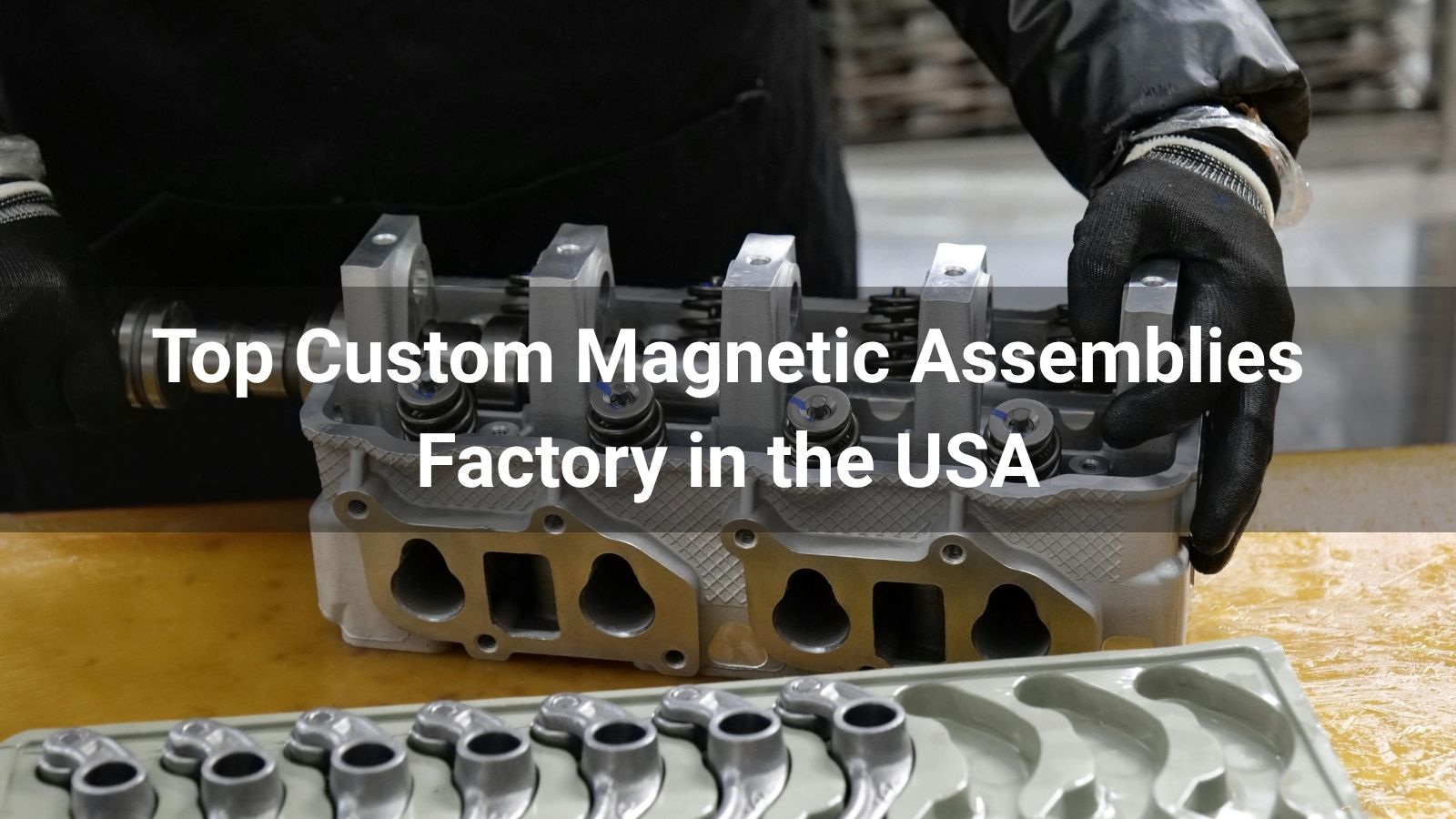 Jul 10, 2026Top 10 Custom Magnetic Assemblies Factory in the USA 2026
 -
 Jul 22, 2026Top 5 Rotor Assembly Manufacturers in the USA 2026


Laster Blogs


Set A Consultation Today
Name can't be empty
Email error!
Send Your Message
*We respect your confidentiality and all
information are protected.