Custom Magnetic Assemblies: From Magnet Selection to Complete Magnetic Solutions
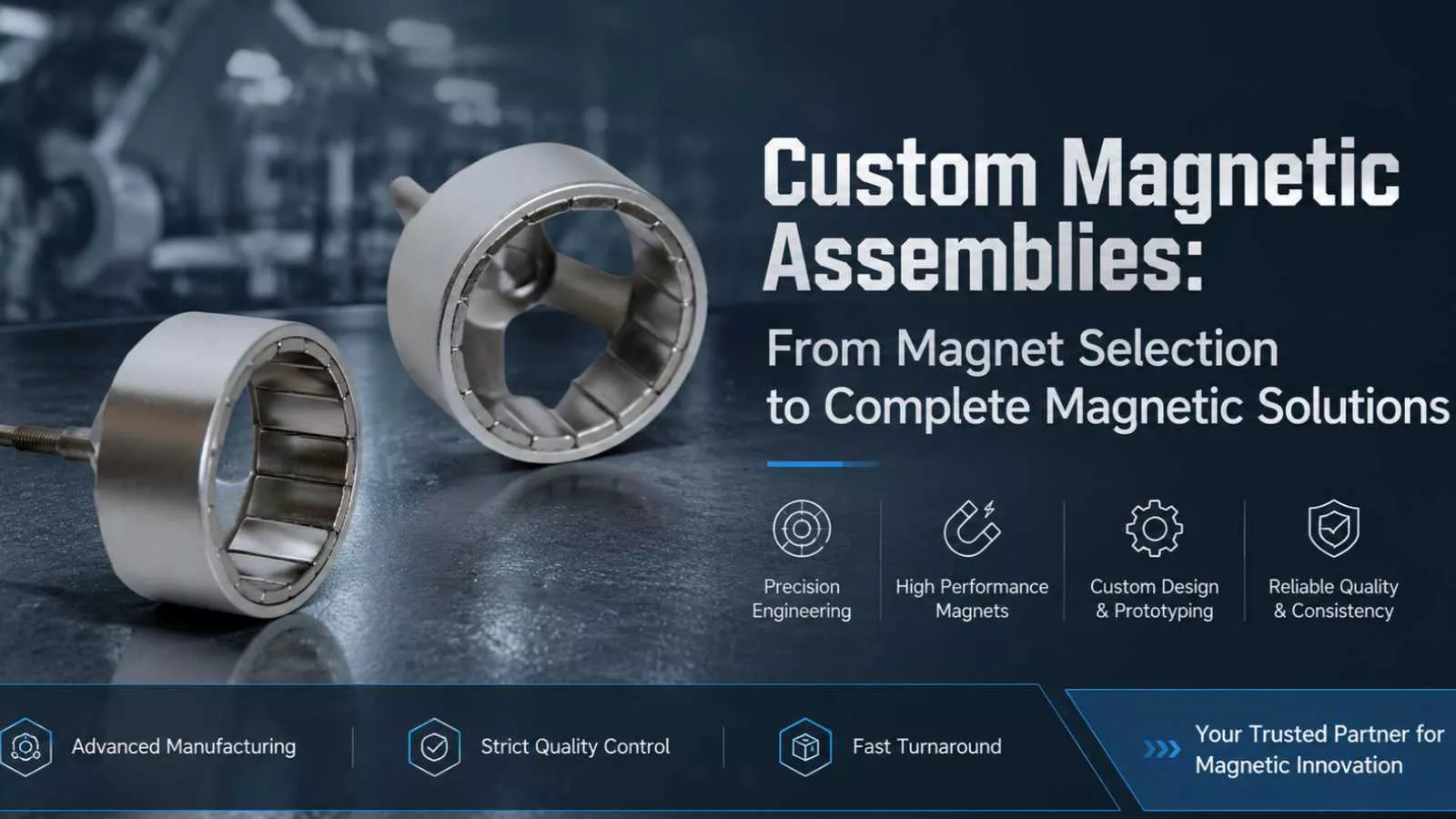
A permanent magnet can provide the magnetic force an application needs, but it is not always the complete engineering solution. In motors, sensors, automation equipment, magnetic couplings, holding systems, and other electromechanical products, the magnet often has to work together with housings, pole pieces, yokes, brackets, shafts, laminations, or other structural components.
This is where custom magnetic assemblies become valuable.
Instead of sourcing individual magnets and then solving the magnetic circuit, mechanical integration, assembly, and testing separately, OEMs can develop an integrated magnetic component around the actual requirements of the application. The objective is not simply to produce a stronger magnet. It is to create an assembly with the required magnetic performance, dimensions, installation method, environmental resistance, and production consistency.
For engineers and OEM procurement teams, the key question is therefore not simply which magnet to buy. It is how to select the right magnetic material, integrate it into a functional assembly, validate the design, and choose a manufacturer capable of supporting the project through production.
In This Guide
- What Are Custom Magnetic Assemblies?
- What Goes Into a Custom Magnetic Assembly?
- Choosing the Right Magnet for a Custom Assembly
- Common Types of Custom Magnetic Assemblies
- Key Design Parameters for Custom Magnetic Assemblies
- How Are Custom Magnetic Assemblies Designed and Manufactured?
- Where Are Custom Magnetic Assemblies Used?
- Custom Magnetic Assembly vs. Buying Individual Magnets
- How to Specify a Custom Magnetic Assembly
- How to Choose a Custom Magnetic Assembly Manufacturer
- Why Choose Vanguard Tech for Custom Magnetic Assemblies?
- FAQ
What Are Custom Magnetic Assemblies?
A custom magnetic assembly is an engineered component that combines one or more magnets with matching magnetic and mechanical components to perform a defined function.
The configuration varies according to the application. A simple assembly may combine a permanent magnet with a housing or mounting structure. A more complex system may include multiple magnets, pole pieces, yokes, shafts, laminations, precision-machined parts, and other components designed around a particular magnetic circuit.
The important distinction is that a magnetic assembly is designed as a functional system, rather than as a collection of independently sourced parts.
From a Standalone Magnet to an Engineered Component
A standalone magnet can work well when the application is straightforward. Once a product has tighter space limitations, a defined air gap, a particular magnetization direction, or specific mechanical interfaces, however, the magnet can no longer be considered in isolation.
For example, a motor rotor needs magnets positioned accurately in relation to the rotor structure. A magnetic sensor may require a particular field strength at a defined position rather than maximum magnetic force in general. A magnetic coupling has to balance magnetic torque, air gap, mechanical strength, and operating speed.
In these cases, the real requirement is not simply a magnet. It is a magnetic function that needs to operate reliably inside a larger product.
When Is a Standard Magnet Not Enough?
The decision to use a custom magnetic assembly usually begins with a limitation in the existing design.
A standard magnet may have sufficient magnetic strength but the wrong dimensions. Another may fit mechanically but provide inadequate performance at the required temperature. A third may deliver the necessary field but still require a separate housing, mounting system, or magnetic circuit before it can be integrated into the final product.
A custom assembly addresses these problems at the system level. The magnet, surrounding components, interfaces, and performance requirements can be considered together rather than being solved one by one.
What Goes Into a Custom Magnetic Assembly?
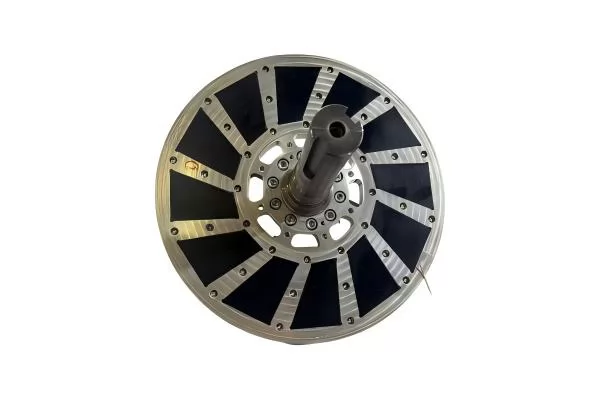
The exact construction depends on the application, but most custom assemblies combine three closely related elements: the magnetic material, the magnetic circuit, and the mechanical structure.
Permanent Magnets
The magnet is normally the functional core of the assembly. Different materials offer different combinations of magnetic performance, temperature capability, corrosion resistance, geometry, and cost.
Common choices include NdFeB, SmCo, Ferrite, AlNiCo, and bonded magnets. The appropriate choice depends on the application rather than on a single specification such as maximum magnetic strength.
A compact motor may favor a high-energy NdFeB magnet, while a high-temperature application may justify SmCo. Ferrite can be attractive when cost and corrosion resistance are important, while AlNiCo and bonded magnets may suit more specialized geometries and operating conditions.
Magnetic Circuit Components
The surrounding magnetic structure can significantly affect how a magnet performs.
Pole pieces, yokes, magnetic housings, and other flux-conducting components can influence the direction and concentration of magnetic flux. Changing their geometry can alter the field distribution even when the permanent magnet itself remains unchanged.
For this reason, magnetic assembly design should consider the magnet and its surrounding magnetic circuit as one system.
Mechanical Components
A magnetic assembly also has to fit and survive inside the final product.
Housings, brackets, shafts, sleeves, laminations, and mounting interfaces determine how accurately the magnetic components are positioned and retained. The mechanical structure also has to withstand vibration, shock, rotational forces, thermal expansion, and other conditions encountered during operation.
This is particularly important in motor applications, where magnetic alignment and mechanical accuracy can affect efficiency, noise, balance, and service life.
Bonding and Protection
Depending on the application, magnets may require adhesive bonding, mechanical retention, coatings, encapsulation, or other forms of protection.
The appropriate approach depends on operating temperature, moisture, corrosion exposure, mechanical loading, and the characteristics of the selected magnet. Magnetic performance alone does not determine long-term reliability; the retention and protection method are part of the engineering solution as well.
Choosing the Right Magnet for a Custom Assembly
Material selection should follow the requirements of the complete assembly rather than the magnetic strength of the material alone.
A stronger magnet is not necessarily a better choice. If the assembly operates at elevated temperatures, needs high corrosion resistance, or has tight cost and dimensional constraints, another material may provide a better overall balance.
| Magnet Material | Typical Strength | Key Advantage | Common Considerations |
|---|---|---|---|
| NdFeB | Very high | High magnetic performance in compact designs | Temperature and corrosion protection may need attention |
| SmCo | High | Strong temperature capability and environmental stability | Higher material cost |
| Ferrite | Moderate | Economical and corrosion resistant | Lower magnetic energy density |
| AlNiCo | Moderate | Useful temperature characteristics | Application-specific magnetic design required |
| Bonded Magnets | Application dependent | Complex shapes and flexible manufacturing possibilities | Performance depends on formulation and process |
NdFeB Magnets
NdFeB is often selected when high magnetic performance is required within a limited package size. This makes it particularly relevant to compact motors, EV systems, automation equipment, sensors, and other applications where available space is limited.
The advantage is not simply higher magnetic strength. A compact, high-performance magnet can give designers more freedom to meet the dimensional requirements of the complete assembly.
SmCo Magnets
SmCo becomes attractive when temperature capability and environmental stability carry greater weight.
For applications where the assembly must continue operating under elevated temperatures, the additional material cost can be justified by the resulting stability and reliability.
Ferrite Magnets
Ferrite is often considered when cost, corrosion resistance, and acceptable magnetic performance are more important than achieving the highest possible energy density.
For larger assemblies or applications without extreme space constraints, it can provide a practical balance between performance and cost.
AlNiCo and Bonded Magnets
AlNiCo can be useful in specialized applications where its temperature characteristics and magnetic behavior fit the design.
Bonded magnets offer another route where complex geometries, molded forms, or particular manufacturing requirements make them suitable.
The key principle remains simple: select the material based on the application, not on a single catalog specification.
Common Types of Custom Magnetic Assemblies
Custom magnetic assemblies can serve very different functions. Common designs include rotor assemblies, magnetic couplings, Halbach arrays, laminated magnetic structures, magnetic wheels, linear motor components, pot magnets, and other application-specific configurations.
Rotor Assemblies
Rotor assemblies are particularly important in electric motor applications because the magnets have to maintain accurate positioning within the rotor structure while withstanding the mechanical and thermal conditions of operation.
A production-ready rotor may involve magnets, laminations, shafts, sleeves, balancing requirements, and other components that have to work together with tight dimensional control.
Magnetic Couplings
Magnetic couplings transfer torque or motion through a magnetic field rather than through a direct mechanical connection.
Their design requires more than selecting magnets with sufficient attraction. The magnetic arrangement, working air gap, torque requirement, containment structure, speed, and operating environment all have to be considered together.
This makes magnetic couplings a good example of why a custom assembly should be designed around the complete application rather than around a standalone magnet.
Halbach Arrays
A Halbach array uses a specific orientation of permanent magnets to concentrate the magnetic field in a preferred direction while reducing the field on the opposite side.
This arrangement can be useful when space is limited or when the application requires a controlled magnetic field distribution.
Laminated Magnetic Assemblies
Laminated magnetic structures are commonly associated with motor and electromagnetic applications where the geometry and electrical behavior of the magnetic circuit need to be carefully controlled.
They become particularly useful when the magnetic component is part of a larger motor architecture rather than an independent magnetic device.
Magnetic Wheels
A magnetic wheel combines magnetic attraction with a mechanical rolling structure. The design therefore has to balance holding force with wheel dimensions, working gap, load, rolling behavior, shaft interface, and surface conditions.
A stronger magnet is not automatically better if excessive magnetic attraction increases rolling resistance or makes the system difficult to operate.
Linear Motors, Pot Magnets, and Other Assemblies
Other magnetic assemblies can be designed for linear motion, holding, lifting, positioning, sensing, or specialized magnetic functions.
The common principle is that the magnetic structure is engineered around the required function and installation conditions instead of forcing the application to conform to an off-the-shelf magnet.
Key Design Parameters for Custom Magnetic Assemblies
Good assembly design starts with clearly defined requirements. These requirements are closely related, and overlooking one can compromise an otherwise successful design.
Magnetic Performance
The magnetic requirements may include force, flux density, field distribution, magnetic moment, pole configuration, magnetization direction, and working air gap.
These parameters should be evaluated at the actual operating position rather than treated as isolated catalog values. A magnet that performs well in free air can behave differently after installation inside a steel housing or next to other magnetic components.
Mechanical Requirements
The mechanical side of the design is just as important.
Dimensions, tolerances, alignment, mounting interfaces, shaft or bore geometry, housing design, and retention methods all determine whether the magnetic system can maintain its intended configuration during use.
This is particularly critical for rotating assemblies. Small positional variations can influence balance, air gap, vibration, and downstream motor performance.
Environmental Requirements
The operating environment also has to be defined early. Temperature, humidity, corrosive exposure, chemical contact, vibration, and mechanical shock can all influence material selection and assembly design.
For example, choosing a high-strength NdFeB magnet without considering its actual temperature and corrosion environment can create a design that performs well during initial testing but becomes unreliable over its service life.
Application Constraints
Finally, the assembly must fit the product itself.
Available installation space, total weight, working gap, rotational speed, load, duty cycle, and safety margins can all change the optimum design. The best assembly is therefore the one that satisfies the complete set of application requirements—not necessarily the one with the most impressive individual component specifications.
How Are Custom Magnetic Assemblies Designed and Manufactured?
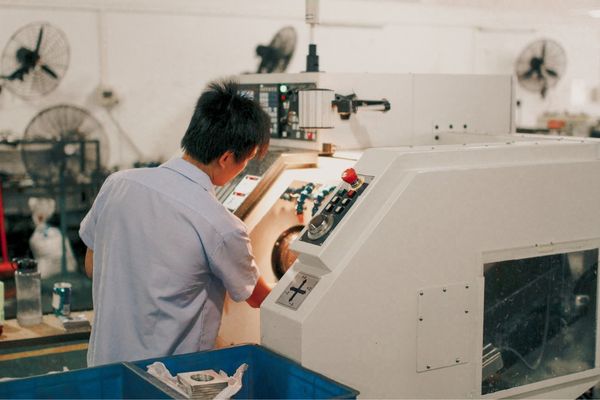
Custom magnetic assemblies should be developed as an engineering process rather than treated as a simple fabrication order.
Application and Requirement Review
The process begins by defining what the assembly must accomplish. This means understanding its magnetic performance, dimensions, mechanical interfaces, operating environment, and expected production conditions.
A clear requirement review also helps identify where trade-offs are likely to occur. For example, increasing magnetic force may affect dimensions, cost, temperature performance, or mechanical retention.
Magnet and Material Selection
Once the requirements are clear, the appropriate magnet material, grade, geometry, and magnetization direction can be selected.
At this stage, performance should be considered together with temperature, corrosion, available space, manufacturability, and cost.
Magnetic and Mechanical Design
The magnetic circuit and mechanical structure should then be developed together. Magnet placement, pole configuration, air gap, flux path, housing, retention, and component tolerances all influence the final result.
For complex assemblies, this is where engineering support can make a significant difference. A magnet that appears suitable on paper may create unintended interactions once it is placed inside the complete structure.
Simulation and Design Validation
For demanding applications, FEA and other simulation methods can help engineers compare alternative magnet grades, geometries, orientations, air gaps, and magnetic circuits before committing to physical production.
Simulation does not replace physical testing, but it can reduce the number of design iterations and provide a stronger basis for prototype development.
Prototyping
A prototype provides an opportunity to verify both magnetic and mechanical performance.
Rather than asking whether a magnet meets its catalog specification, engineers can determine whether the complete assembly delivers the required performance after integration into the intended structure.
This stage can uncover issues involving fit, magnetic field distribution, temperature, retention, tolerances, or manufacturing repeatability before the project enters full-scale production.
Manufacturing, Assembly, and Testing
Once the design has been validated, the manufacturing process can move into magnet processing, precision machining, component production, bonding or mechanical retention, magnetization, and final assembly as required by the design.
Testing should then focus on the characteristics that matter to the application. Magnetic performance, dimensional accuracy, mechanical behavior, and environmental suitability all need to be controlled when they influence final product performance.
Where Are Custom Magnetic Assemblies Used?
The value of a custom assembly becomes particularly clear when magnetic performance has to be integrated with a mechanical or electronic system.
Electric Motors and EV Motors
Motor applications are one of the most important areas because rotor magnets, laminations, shafts, and other components have to work together within a tightly controlled architecture.
Permanent magnets and assembled motor components are used across industrial motors, electric vehicles, appliances, power tools, and other motion systems.
Industrial Automation
Automation equipment may use magnetic components for sensing, positioning, actuation, holding, or motion control. These applications often have limited installation space and tight repeatability requirements, making custom geometry and controlled magnetic performance valuable.
Sensors and Measurement Systems
Sensors may need a magnetic field at a specific location rather than maximum available magnetic force.
This makes magnetization direction, field distribution, geometry, and dimensional accuracy important design variables.
Home Appliances and Power Tools
Compact motor architectures require combinations of magnetic performance, manufacturing consistency, cost control, and mechanical durability.
A custom assembly can simplify integration by consolidating multiple magnetic and mechanical components into a single production-ready unit.
Magnetic Coupling and Motion Systems
Magnetic couplings and linear motor assemblies use controlled magnetic interactions to achieve torque transfer, linear motion, isolation, or positioning.
Here again, the required result depends on the complete magnetic architecture rather than on an individual magnet's strength.
Custom Magnetic Assembly vs. Buying Individual Magnets
One of the most practical sourcing decisions is whether to buy magnets separately or source a complete assembly from an experienced manufacturer.
| Consideration | Individual Magnets | Custom Magnetic Assembly |
|---|---|---|
| Magnet selection | Typically managed by the buyer | Can be supported by the supplier |
| Magnetic circuit | Designed separately | Developed as part of the assembly |
| Mechanical integration | Usually handled downstream | Included in the engineered component |
| Assembly work | Buyer or another supplier | Completed within the supplied solution |
| Testing | May involve several stages | Can include assembly-level validation |
| Installation | Requires additional integration | Designed around the final interface |
| Supply chain | More components and suppliers | More consolidated sourcing |
Buying individual magnets can still be the right option for simple products or companies with strong internal design and assembly capabilities.
A custom magnetic assembly becomes more attractive when the OEM wants to reduce integration work, control performance more consistently, or simplify sourcing. It is especially useful when magnetic and mechanical requirements are closely connected and the final component needs to arrive ready for integration.
How to Specify a Custom Magnetic Assembly
A manufacturer can develop a better solution when the initial requirements are clear.
The magnetic specification should describe the required force, flux density, field location, magnetization direction, pole configuration, or working air gap where these parameters are known. Mechanical information should cover dimensions, tolerances, mounting interfaces, shaft or bore requirements, and available installation space.
Environmental information is equally important. Operating temperature, humidity, corrosion exposure, vibration, shock, and duty cycle may influence both material selection and assembly construction.
Production requirements should also be discussed early, particularly when the project involves a transition from prototype to mass production.
What Should You Send to a Manufacturer?
For an existing design, a 2D engineering drawing or 3D CAD model is often the best starting point. A physical sample can also be useful when the assembly needs to be reverse-engineered or optimized.
Where available, an RFQ should also include the expected magnetic performance, operating conditions, annual volume, prototype quantity, testing requirements, and any specific quality documentation.
This information gives the manufacturer enough context to evaluate the design instead of quoting a magnet or component in isolation.
How to Choose a Custom Magnetic Assembly Manufacturer
Choosing a supplier for a custom magnetic assembly requires more than verifying that the company manufactures magnets.
First, consider its magnetic material expertise. A capable supplier should understand how different magnet materials behave under temperature, environmental, dimensional, and performance constraints.
Next, evaluate its engineering capability. For complex assemblies, services such as FEA simulation, material selection, DFM review, reverse engineering, and rapid prototyping can reduce development risk and shorten the path from concept to production.
Manufacturing integration is another important consideration. If a project requires magnets, housings, shafts, laminations, machining, assembly, and testing, coordinating every stage through separate suppliers can create additional interfaces and quality risks. A manufacturer able to manage several stages within one supply chain can simplify the process.
Testing capability should also be reviewed carefully. The supplier should be able to explain how magnetic performance, dimensional accuracy, mechanical behavior, and environmental suitability are verified.
Finally, look at the supplier's ability to support the project beyond the first prototype. A strong OEM partner should provide a practical path from concept and validation to repeatable mass production rather than treating development and manufacturing as unrelated stages.
Why Choose Vanguard Tech for Custom Magnetic Assemblies?
Vanguard Tech, officially Ningbo Vanguard Technologies Co., Ltd., has built its product and engineering offering around the connection between permanent magnets, magnetic systems, and motor components.
A Broad Permanent Magnet Portfolio
The company offers NdFeB, SmCo, Ferrite, AlNiCo, and bonded magnets in different geometries and configurations. This gives OEMs access to multiple material options when balancing magnetic performance, temperature, corrosion resistance, size, and cost.
Magnetic Systems Beyond Individual Magnets
Its product range extends into rotor assemblies, magnetic couplings, Halbach arrays, laminated magnets, magnetic wheels, linear motors, pot magnets, and other custom magnetic assemblies. This broader range is relevant to projects where the magnet itself is only one part of the final engineering solution.
Engineering Support Through Product Development
The engineering service portfolio includes Motor R&D, FEA simulation, material selection, DFM review, failure analysis, reverse engineering, rapid prototyping, manufacturing process control, and production optimization. These capabilities support projects that require engineering input rather than simple catalog purchasing.
Motor-Oriented Manufacturing Capability
For customers developing motor and motion products, the company's wider manufacturing scope includes rotor assemblies, stator assemblies, laminations, and precision machining. This allows magnetic components to be evaluated in relation to the larger motor architecture rather than as standalone parts.
Integrated Supply Chain and Quality Control
The company also supports supply-chain management, project coordination, testing, packaging, and delivery. Its stated quality controls cover magnetic performance, dimensional accuracy, mechanical performance, and environmental adaptability, supporting the consistency required for OEM production.
For OEM buyers that need more than a standalone magnet, this integrated approach can simplify the transition from material selection and assembly design to prototyping and volume production.
FAQ
1. What is a custom magnetic assembly?
A custom magnetic assembly combines one or more magnets with magnetic or mechanical components to deliver a specific functional requirement within a larger product or system.
2. When should I use a custom magnetic assembly instead of a standard magnet?
Use a custom assembly when a standard magnet cannot adequately meet requirements for magnetic performance, dimensions, mounting, environmental conditions, or system integration.
3. Which magnet material is best for a custom magnetic assembly?
The best material depends on magnetic strength, operating temperature, corrosion resistance, size, application requirements, and cost. NdFeB, SmCo, Ferrite, AlNiCo, and bonded magnets each suit different conditions.
4. What information should I provide when requesting a custom magnetic assembly?
Provide drawings or CAD files, magnetic performance requirements, dimensions, operating conditions, mounting requirements, expected quantity, and any specific testing or quality requirements.
5. Can custom magnetic assemblies be prototyped before mass production?
Yes. Prototyping can verify magnetic performance, mechanical fit, assembly methods, and manufacturability before the design moves into volume production.
Conclusion
A successful custom magnetic assembly is more than a collection of magnets and mechanical parts. Its performance depends on how the material, magnetic circuit, mechanical structure, operating environment, manufacturing process, and testing strategy work together.
For straightforward applications, purchasing individual magnets may still be the most efficient approach. When the magnetic function has to be closely integrated with a mechanical or motor system, however, a custom assembly can reduce engineering complexity and provide a more controlled route to production.
The process should therefore begin with the application rather than the magnet: define the required performance, select the appropriate material, develop the magnetic and mechanical structure together, validate the design, and then work with a manufacturer capable of maintaining consistency at production scale.
For OEM customers looking beyond standalone magnets, Vanguard Tech offers a broader path from permanent magnet materials and magnetic systems to motor components, engineering support, prototyping, testing, and supply-chain management. That makes the company relevant when a project requires not just a magnet, but a complete magnetic solution developed for real-world production.
0
Comments
Leave a Comment
Your email address will not be published. Required fields are marked *
Name can't be empty
Email error!
Message can't be empty
😍
😜
😳
😌
😄
😘
😝
😒
😃
😚
😚
😛
😟
😧
😀
😉
😓
😱
😤
😣
😂
😥
😩
😠
😢
😭
😰
😨
😡
😆
😪
😅
😐
😇
😋
😴
👿
😕
😏
😷
😵
😟
😮
😯
😑
👧
👴
😧
😬
😾
👶
👱
👵
👸
🙀
👺
👦
👩
👨
😽
😿
🙈
💩
💥
💤
😼
😹
🙉
🔥
✨
💦
👎
✌
👆
👈
💪
💹
👍
👊
💴
💶
💷
💸
👉
💵
🙏
🌎
🏧
👏
💳
👇
💑
🙆
🙅
💁
👫
👭
🙎
🙇
👑
👔
Submit Comment
Most Popular
-
 Jul 21, 2026Top 8 Motor Laminations Manufacturers in the USA 2026
 -
 Jul 21, 2026Top 10 Electrical Lamination Manufacturers in the USA 2026
 -
 Jul 10, 2026Top 10 Custom Magnetic Assemblies Factory in the USA 2026
 -
 Jul 22, 2026Top 5 Rotor Assembly Manufacturers in the USA 2026


Laster Blogs


Set A Consultation Today
Name can't be empty
Email error!
Send Your Message
*We respect your confidentiality and all
information are protected.